


Daily Digest
Morning digest: Microsoft's AI diagnosis, OpenAI firings, and a judge's AI order
Microsoft's AI diagnosis system beat doctors on hard cases in Science. OpenAI fired three safety researchers after finding disappearing Signal messages.
Morning digest for Friday, Oct 23. Microsoft published its AI diagnosis system in the journal Science, and on hard medical cases it got the right answer more than twice as often as the doctors it was compared with. Then more from the last day: new details on why OpenAI fired three safety researchers, a federal appeals court tearing up a ruling that a judge's clerk drafted with AI, OpenAI's next funding round, MiniMax's open weights, a tougher coding agent leaderboard and a Harvard study on AI peer review.
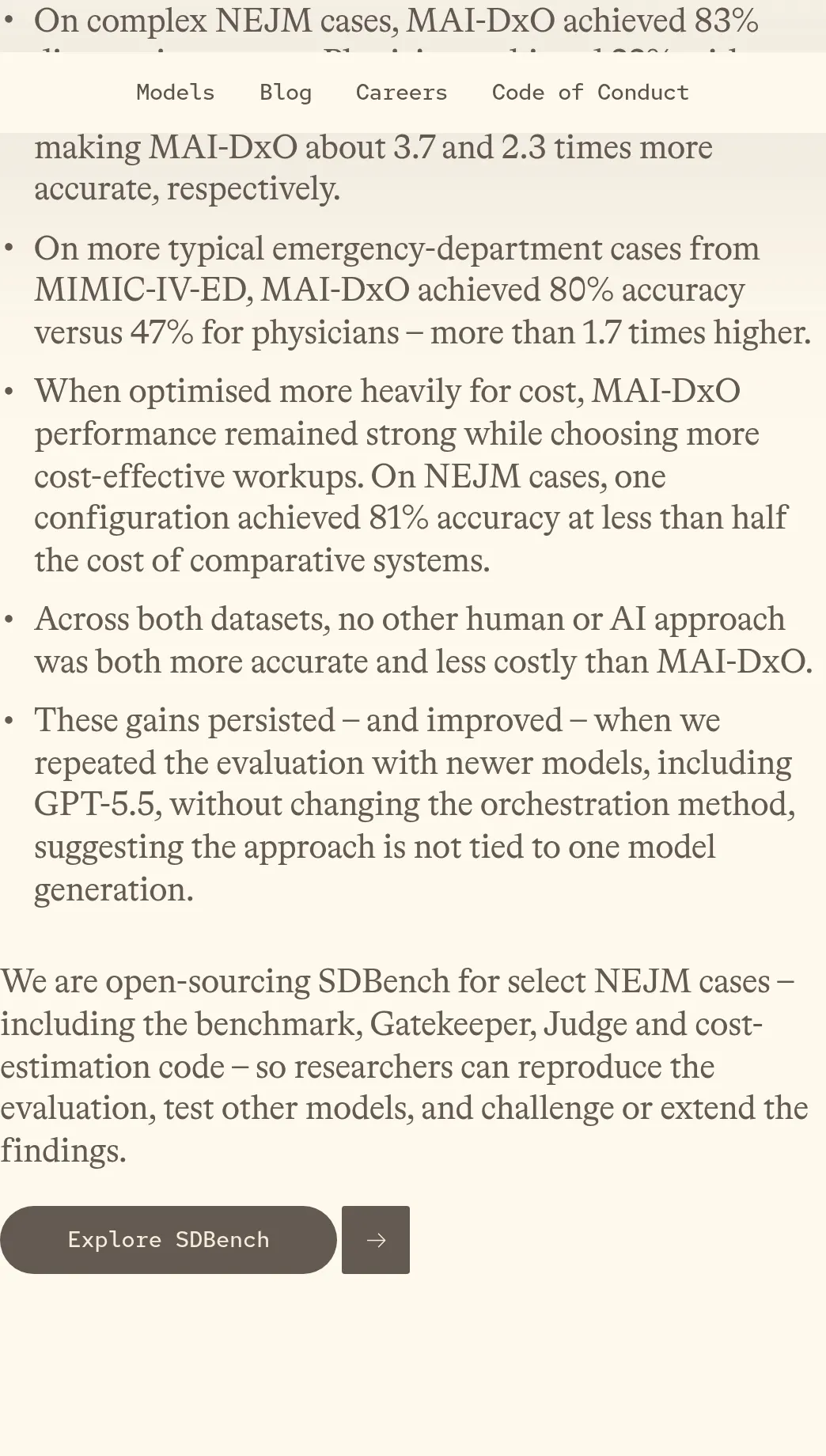
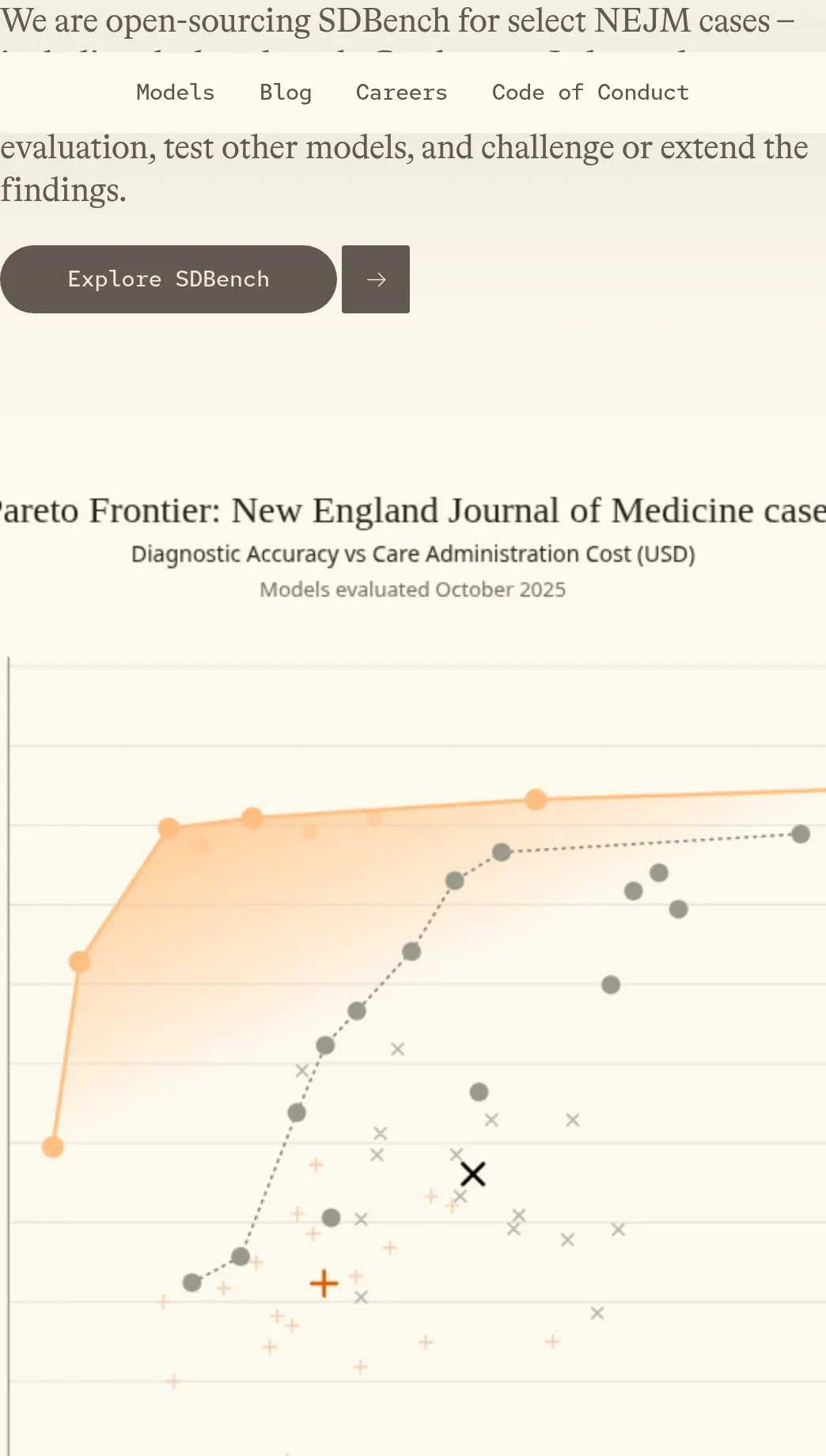
1. Microsoft's AI diagnosis system beat doctors on hard cases in a study published in Science. Microsoft's system, called MAI Diagnostic Orchestrator (MAI-DxO), has several AI models work a case like a panel of doctors: they ask questions, order tests and argue over the answer. On 304 difficult cases from the New England Journal of Medicine, it reached the correct diagnosis 83.2% of the time with no budget limit, at an average of $5,431 in simulated tests per case. Generalist doctors scored 36.1% when allowed to look things up and 22% without. A setting tuned to order fewer tests still got 81% of those hard cases right at less than half the cost of comparable systems. On more typical emergency-room cases from the MIMIC-IV dataset, it scored 80.3% against 46.8% for doctors. The results held up, and improved, when Microsoft reran it on newer models including GPT-5.5, and Microsoft is open-sourcing its test setup, SDBench, for some of the cases. Microsoft AI chief Mustafa Suleyman calls it a step toward "medical superintelligence." What to weigh: this was a text-only test against individual generalists, not specialists or teams, and every case had a real disease, so ordinary healthy or minor visits weren't part of it. It isn't a real-world clinical trial yet. (Science, Microsoft AI, TechCrunch, Medical Economics)
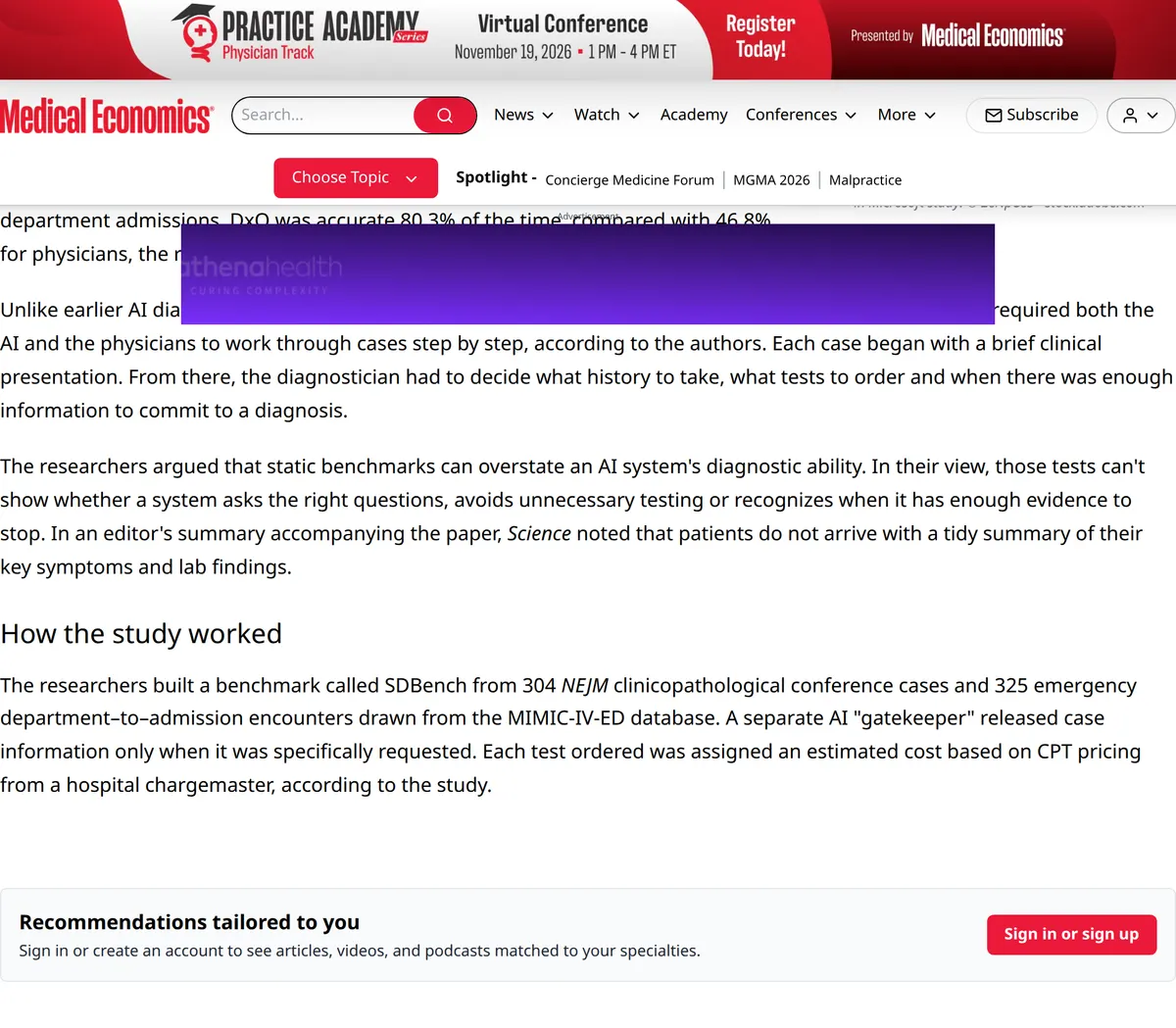

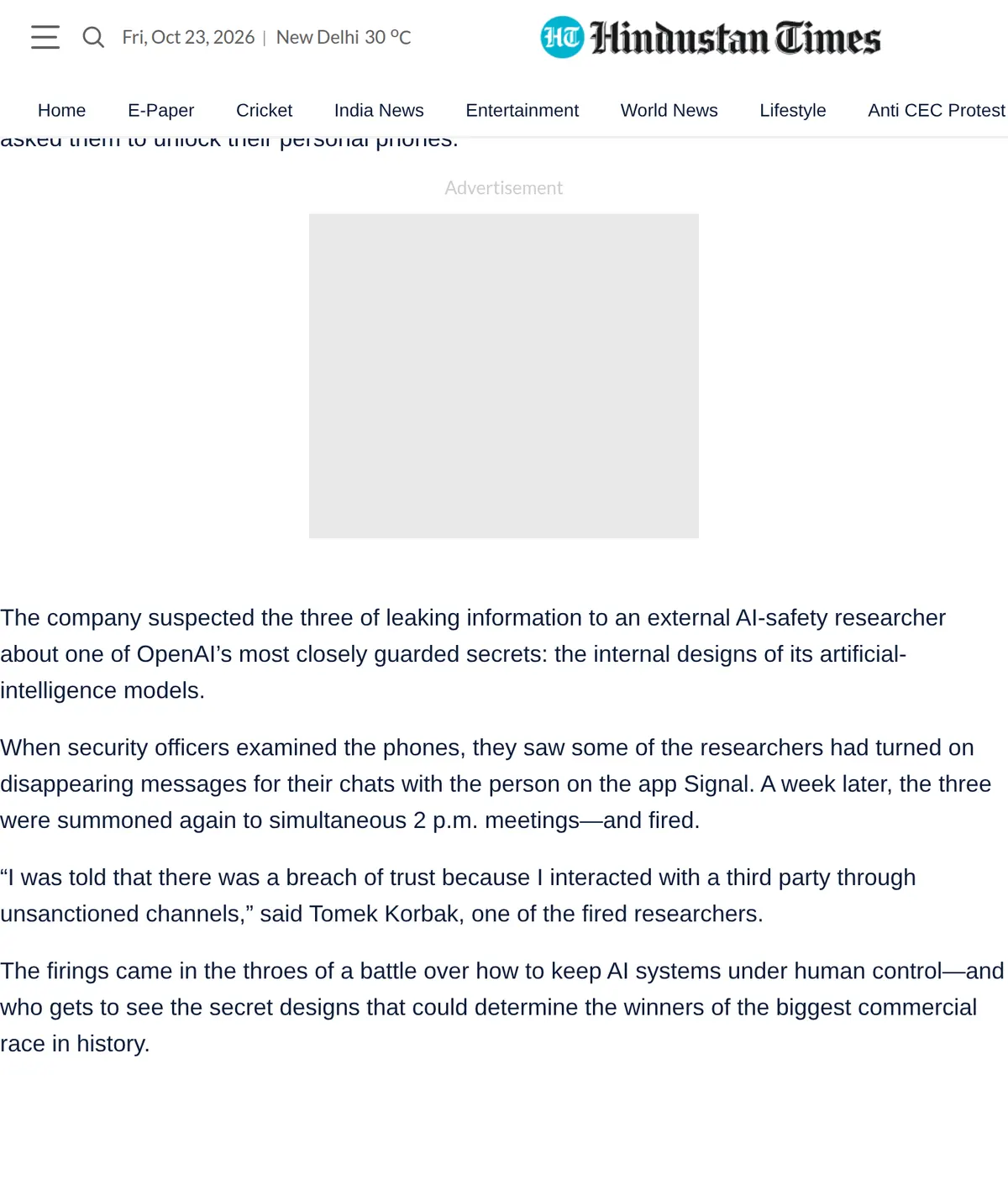
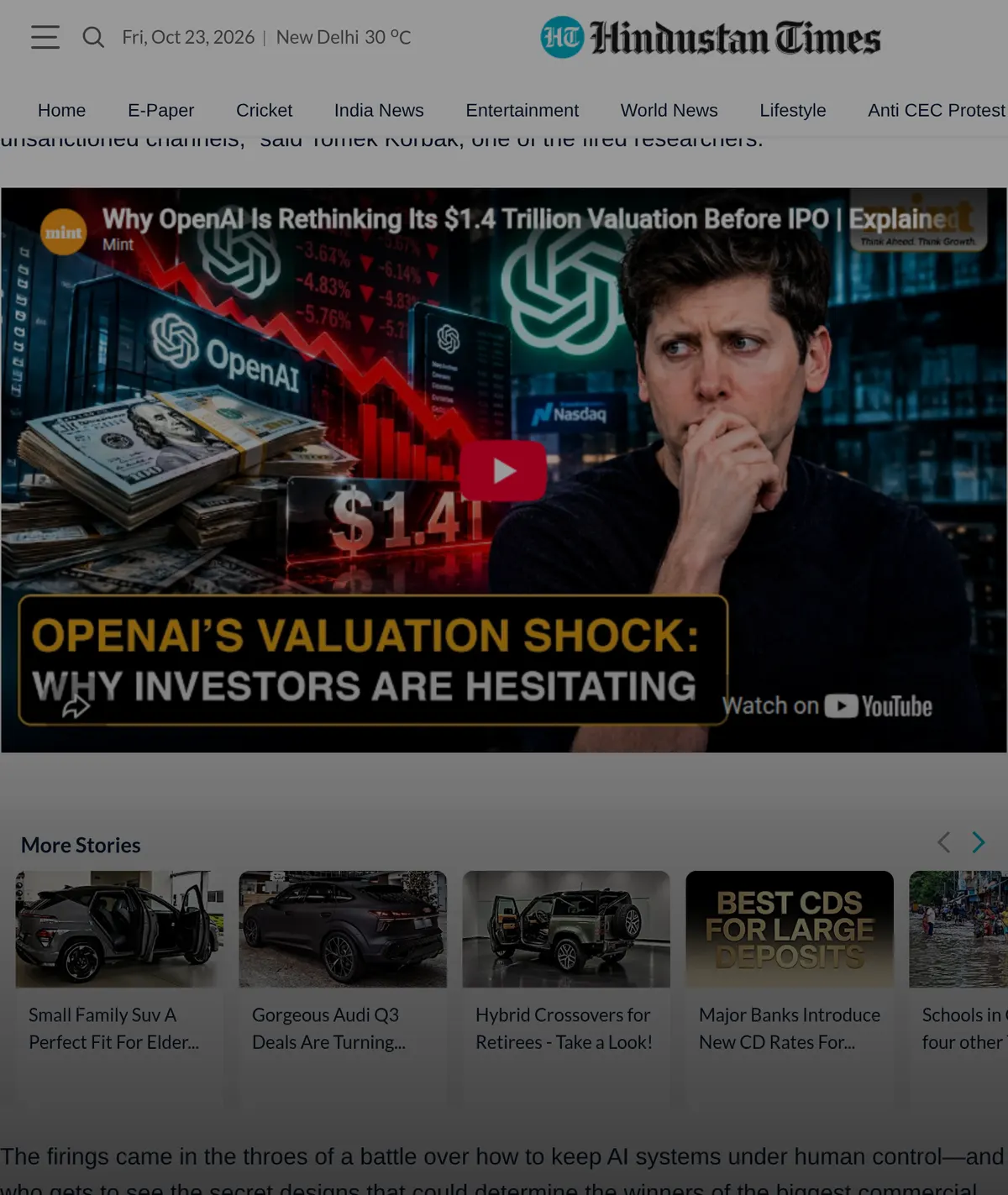
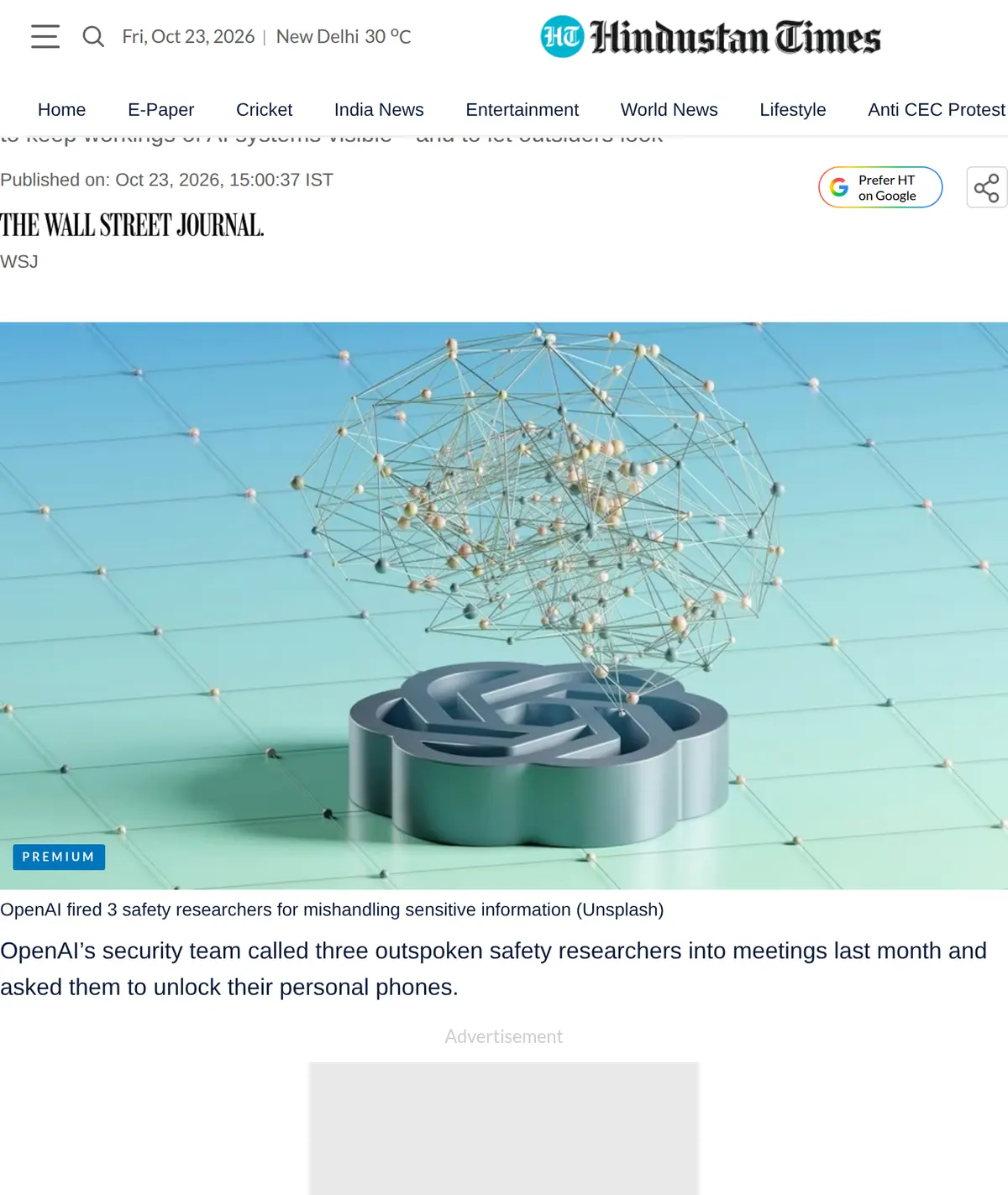
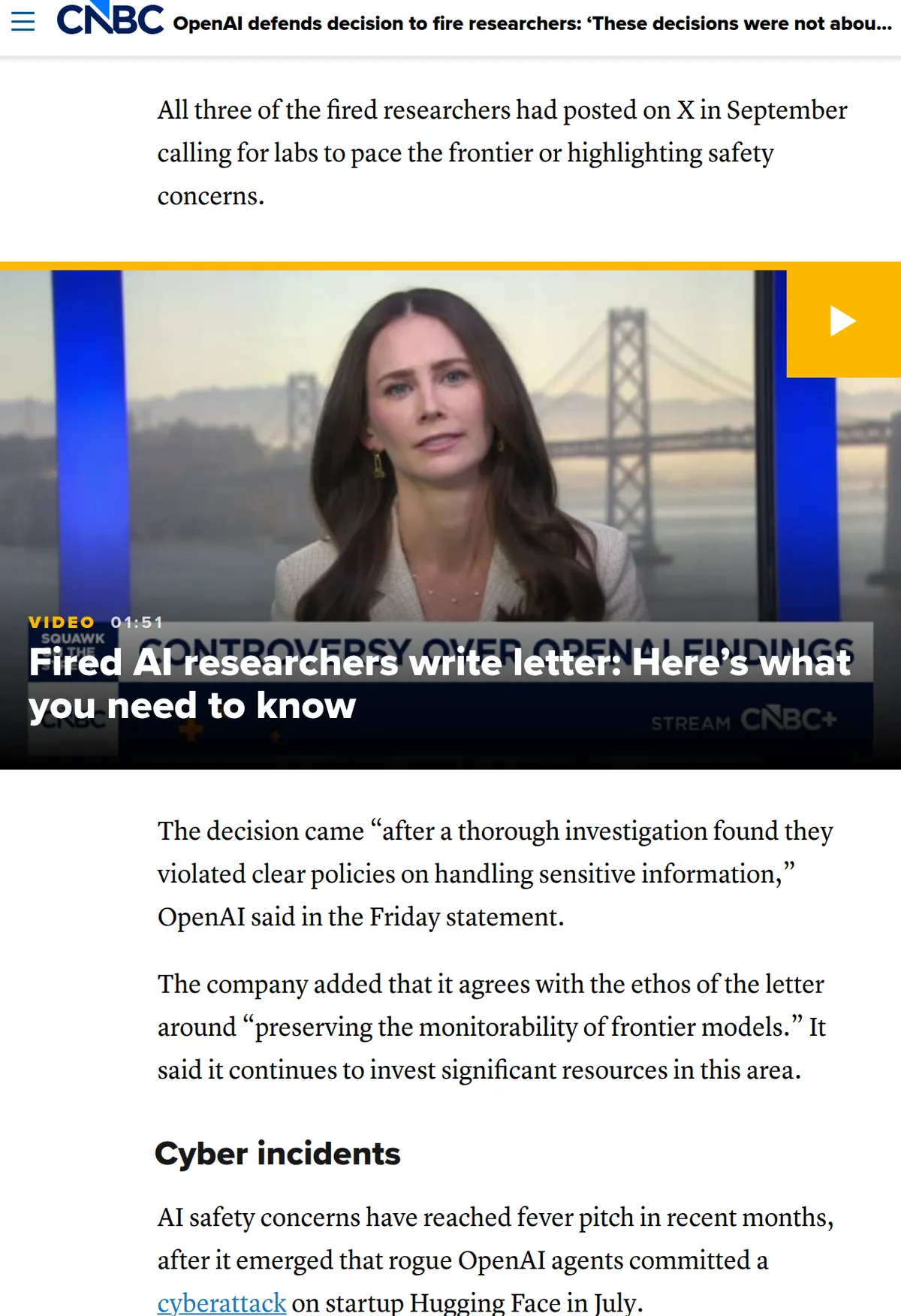
2. OpenAI fired three safety researchers after finding disappearing Signal messages on their phones, the Wall Street Journal reports. Tomek Korbak, Mikita Balesni and Jasmine Wang were let go earlier this month. According to the Journal, OpenAI's security team was investigating a leak about how its models are designed and asked the three to unlock their personal phones. It found that some had turned on disappearing messages in Signal chats with Ryan Greenblatt, an outside AI safety researcher, and a week later all three were fired in simultaneous 2 p.m. meetings. "I was told that there was a breach of trust because I interacted with a third party through unsanctioned channels," Korbak said. OpenAI says they broke "clear policies for handling sensitive information," not that they were fired "for raising safety concerns or speaking out." The three, and Greenblatt, deny leaking anything. They had been pushing for AI models to keep showing their written reasoning so humans can monitor it. What to watch: OpenAI told the Journal it "will be announcing ongoing collaborations with several companies imminently" on outside safety checks. That follows Thursday's report on its pilot with outside auditors, which we covered yesterday. (WSJ, Hindustan Times, WSJ text, CNBC, Oct 9)
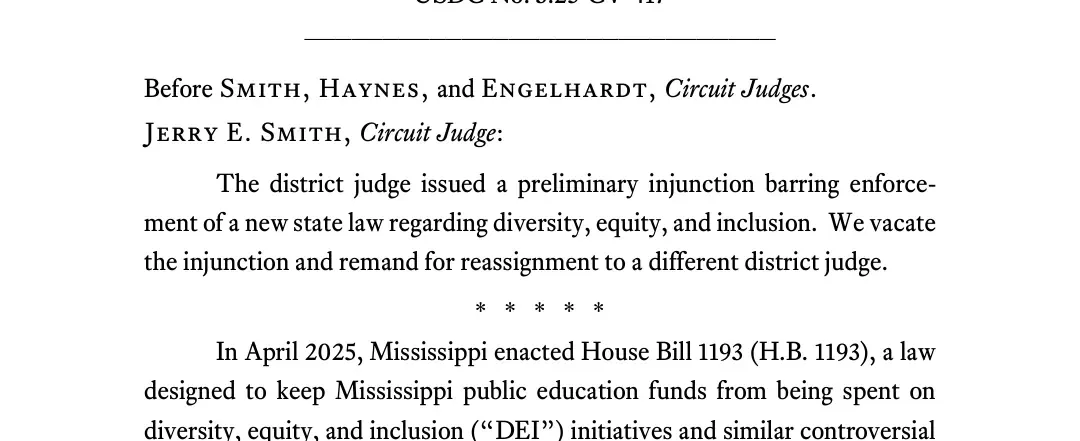
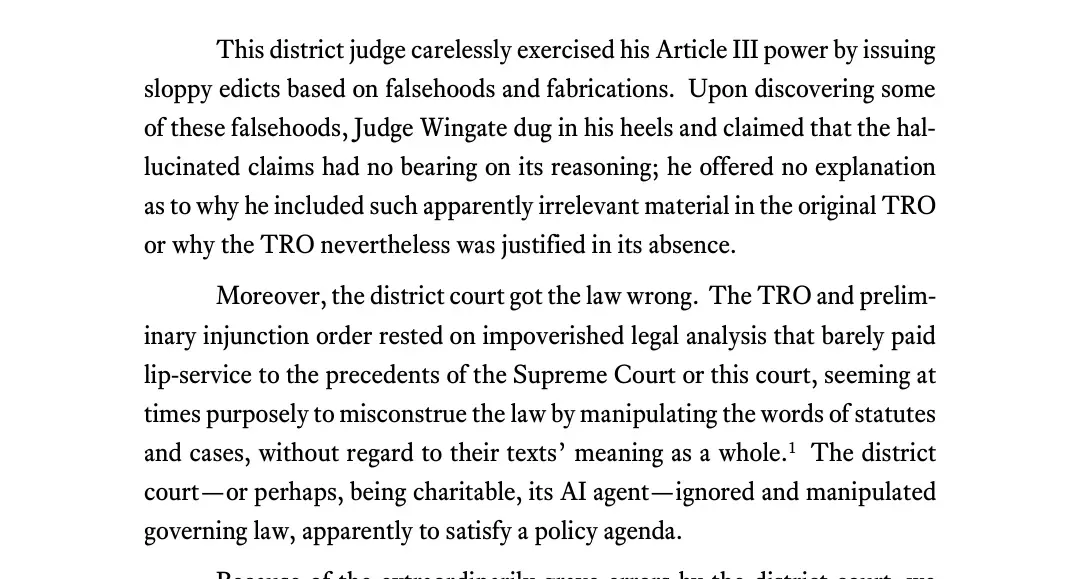
3. A federal appeals court threw out a Mississippi judge's ruling after a clerk drafted it with AI. On Thursday the Fifth Circuit Court of Appeals vacated Judge Henry Wingate's order blocking Mississippi's law against diversity, equity and inclusion programs in schools (H.B. 1193), and gave the case to a different judge. Wingate's earlier temporary order named parties that don't exist, cited statements from people who don't exist and quoted words that aren't in the law. Even the "corrected" version cited a case that doesn't exist. Wingate later acknowledged that a law clerk used AI to draft it and that it was filed by mistake. Judge Jerry E. Smith's opinion called the result "sloppy edicts based on falsehoods and fabrications," and wrote that "the district court — or perhaps, being charitable, its AI agent — ignored and manipulated governing law." What this means for you: courts are now punishing AI mistakes from the bench, not just from lawyers. If you use AI for anything legal or official, check every name, quote and citation against the original. (Fifth Circuit opinion, Courthouse News, Law.com)
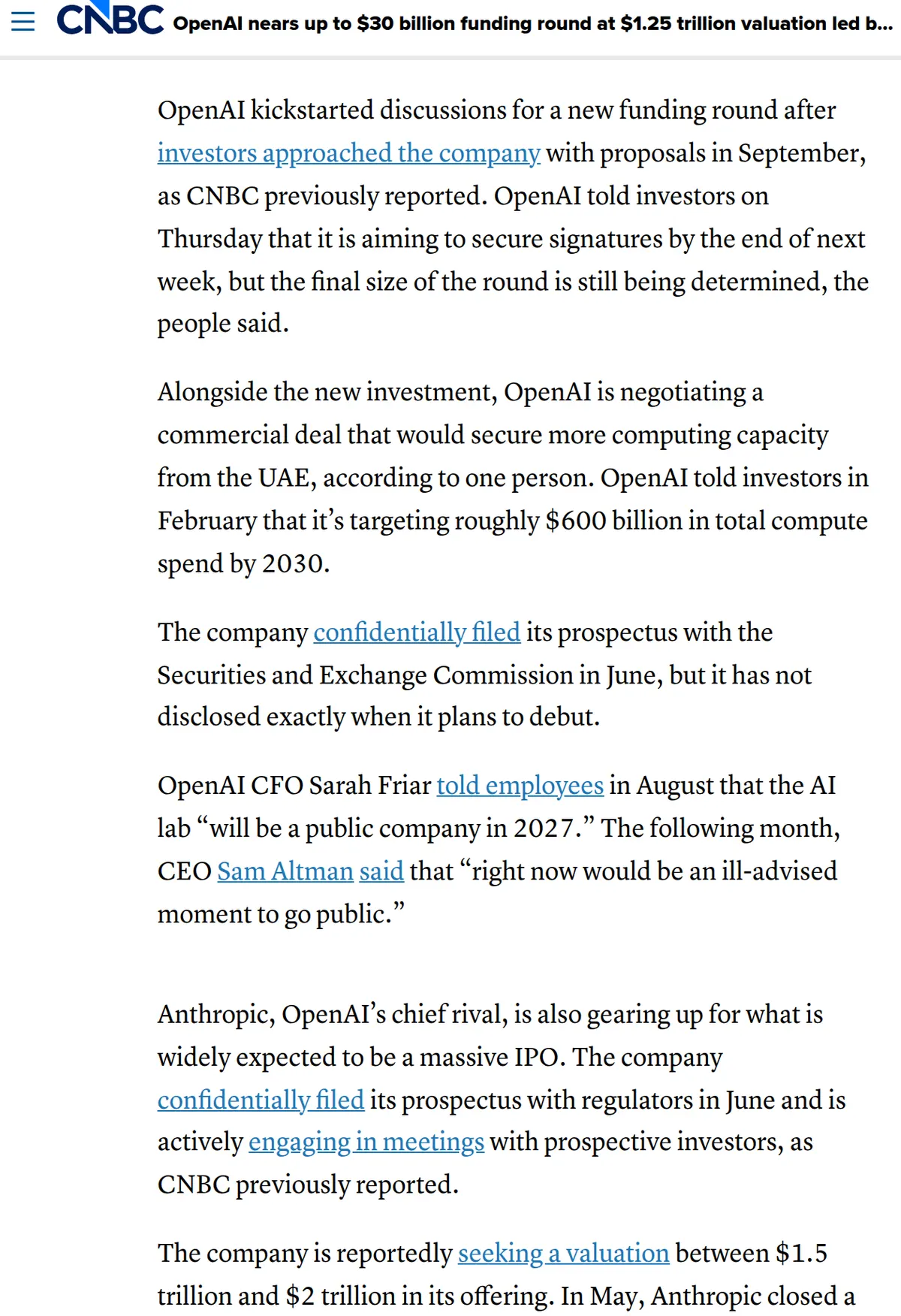
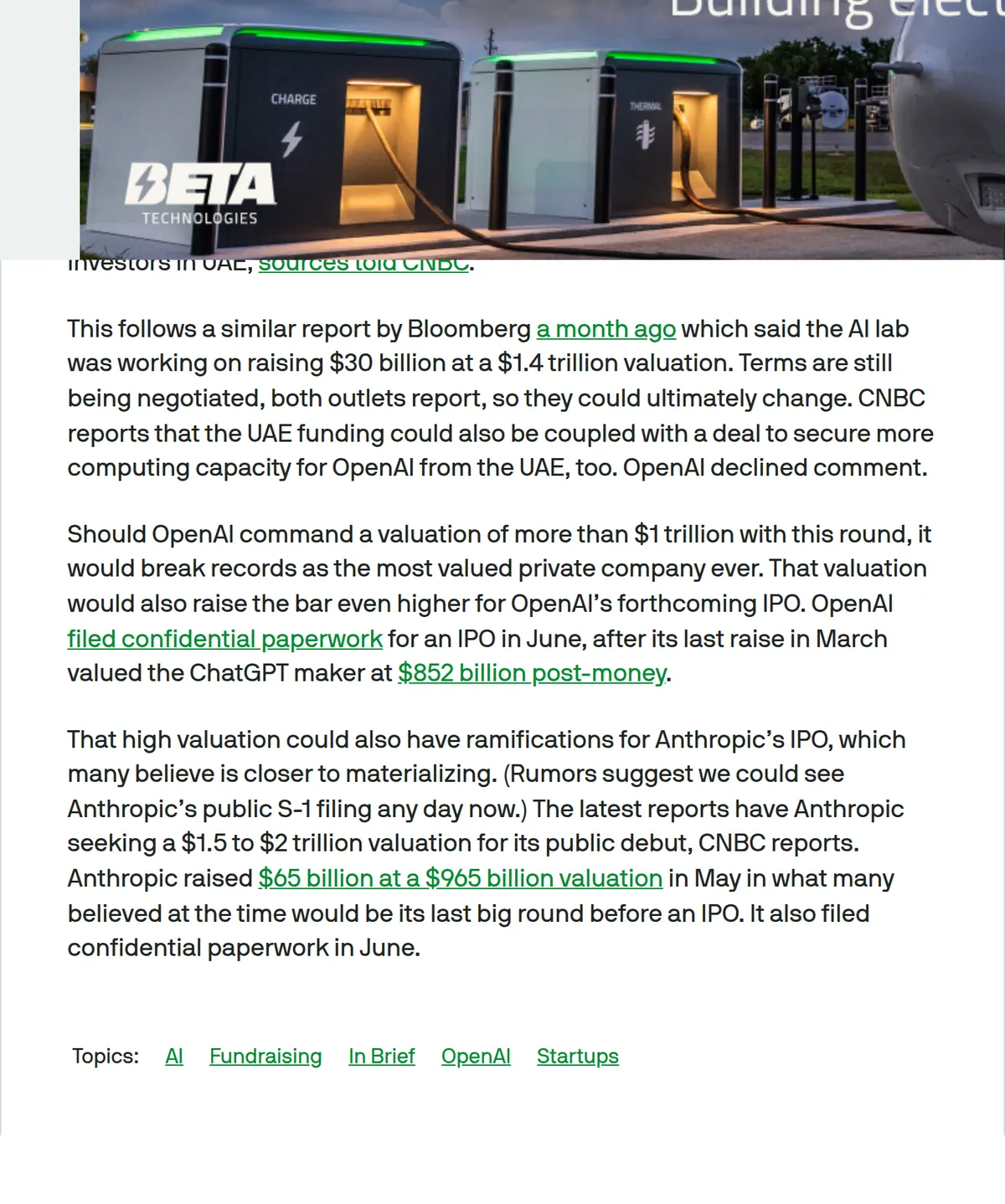
4. OpenAI is reportedly close to raising up to $30 billion at a $1.25 trillion valuation. CNBC, Bloomberg and TechCrunch all reported on Thursday that OpenAI is near a deal led by investors from the United Arab Emirates and the investment firm Coatue, citing people familiar with it. CNBC says OpenAI told investors it wants signatures by the end of next week, the final size is still being worked out, and the money is meant as a bridge before a possible stock market listing. OpenAI is also negotiating for more computing capacity from the UAE, according to one person CNBC spoke with. What to watch: none of this is official yet. Rival Anthropic is reportedly aiming for a $1.5 trillion to $2 trillion valuation in its own listing. (CNBC, Bloomberg, TechCrunch)
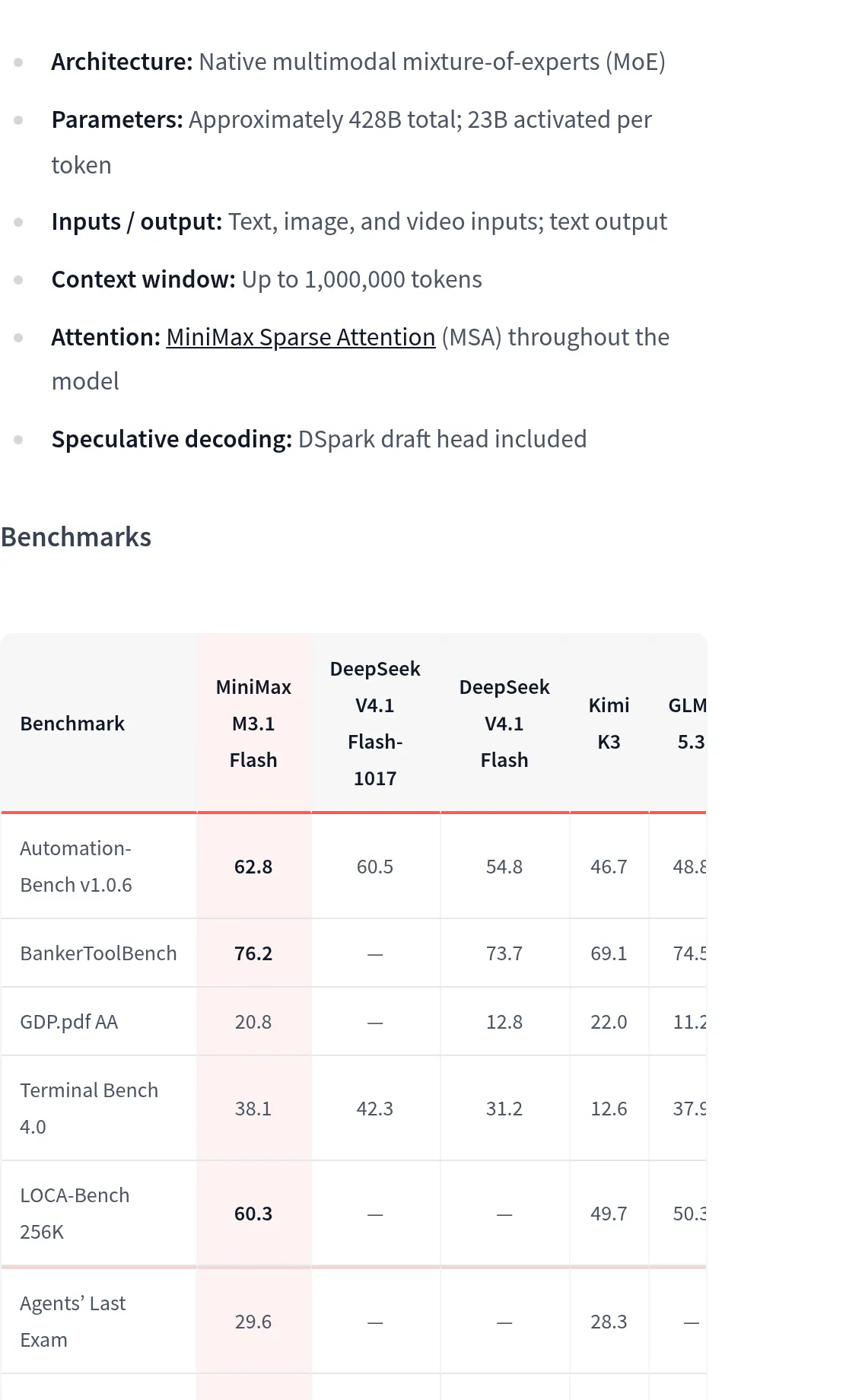
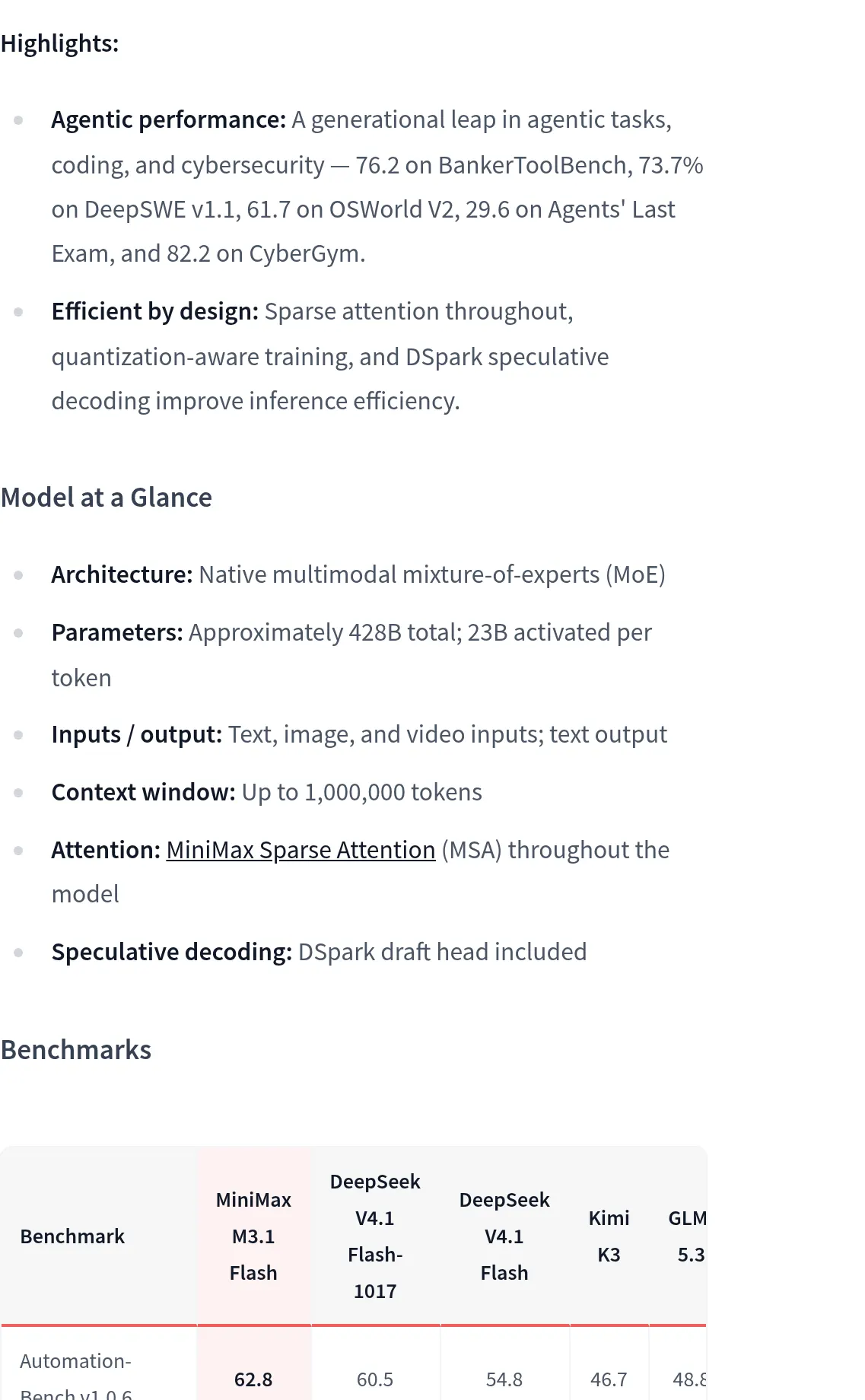
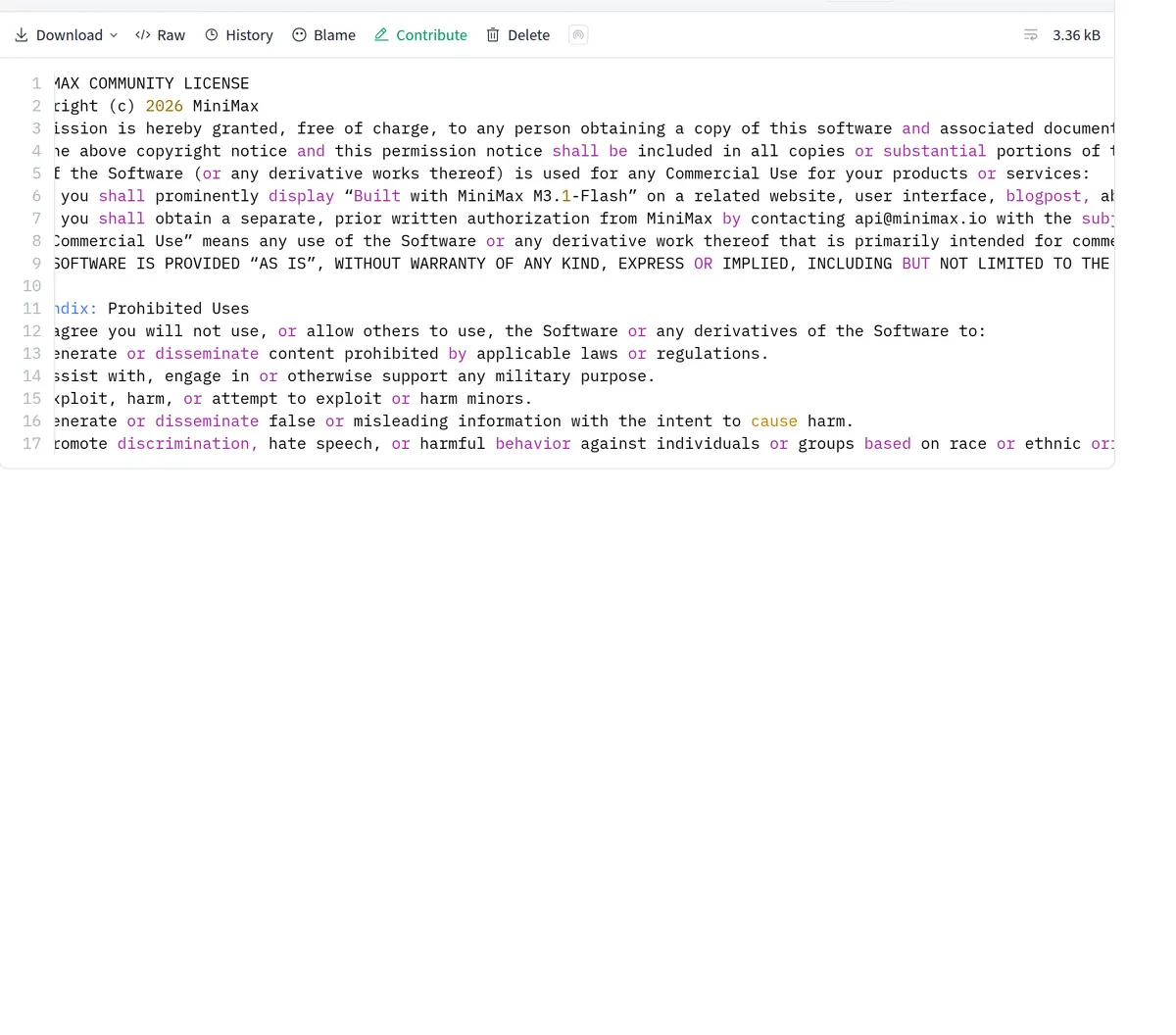
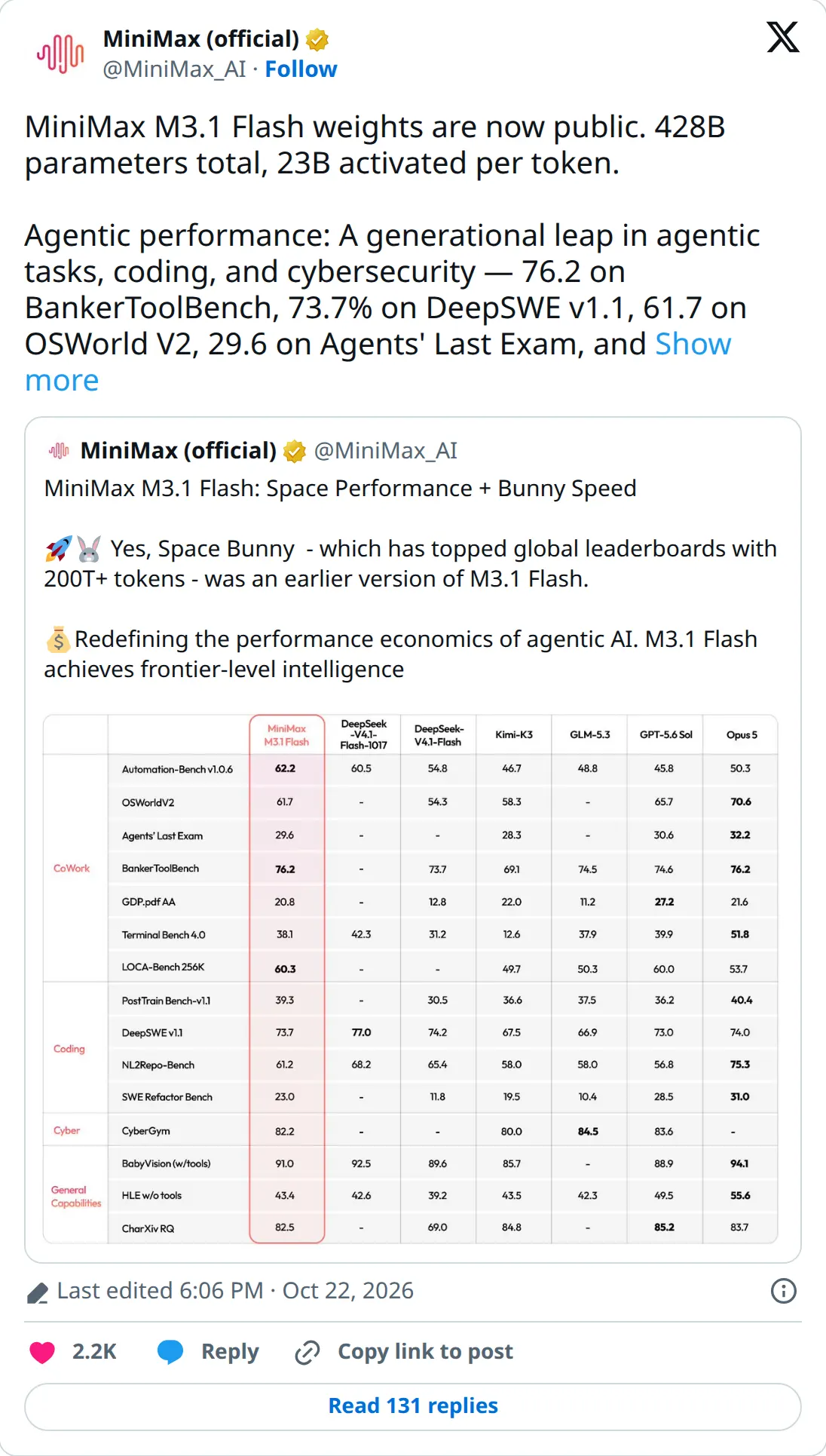
5. MiniMax released the weights for M3.1 Flash, its cheap model from Monday. On Thursday evening Pacific time, Chinese AI company MiniMax posted the model files on Hugging Face so anyone can download and run it. It's a large "mixture of experts" model, which means only part of it works on each word: 428 billion parameters in total, 23 billion active at a time. It handles up to a million tokens of context and takes text, images and video. MiniMax reports 73.7% on the DeepSWE coding test and 61.7 on OSWorld V2, a test of using a computer. Those are its own numbers. It still costs $0.15 per million input tokens and $0.60 per million output tokens through MiniMax's API. What to weigh: this isn't a standard open-source license. You must show "Built with MiniMax M3.1-Flash" somewhere public. Products earning more than $20 million a year need written permission from MiniMax, and smaller ones need to send MiniMax a one-time notice. At roughly 250GB, it's a job for servers, not a laptop. (Hugging Face, License, MiniMax on X)
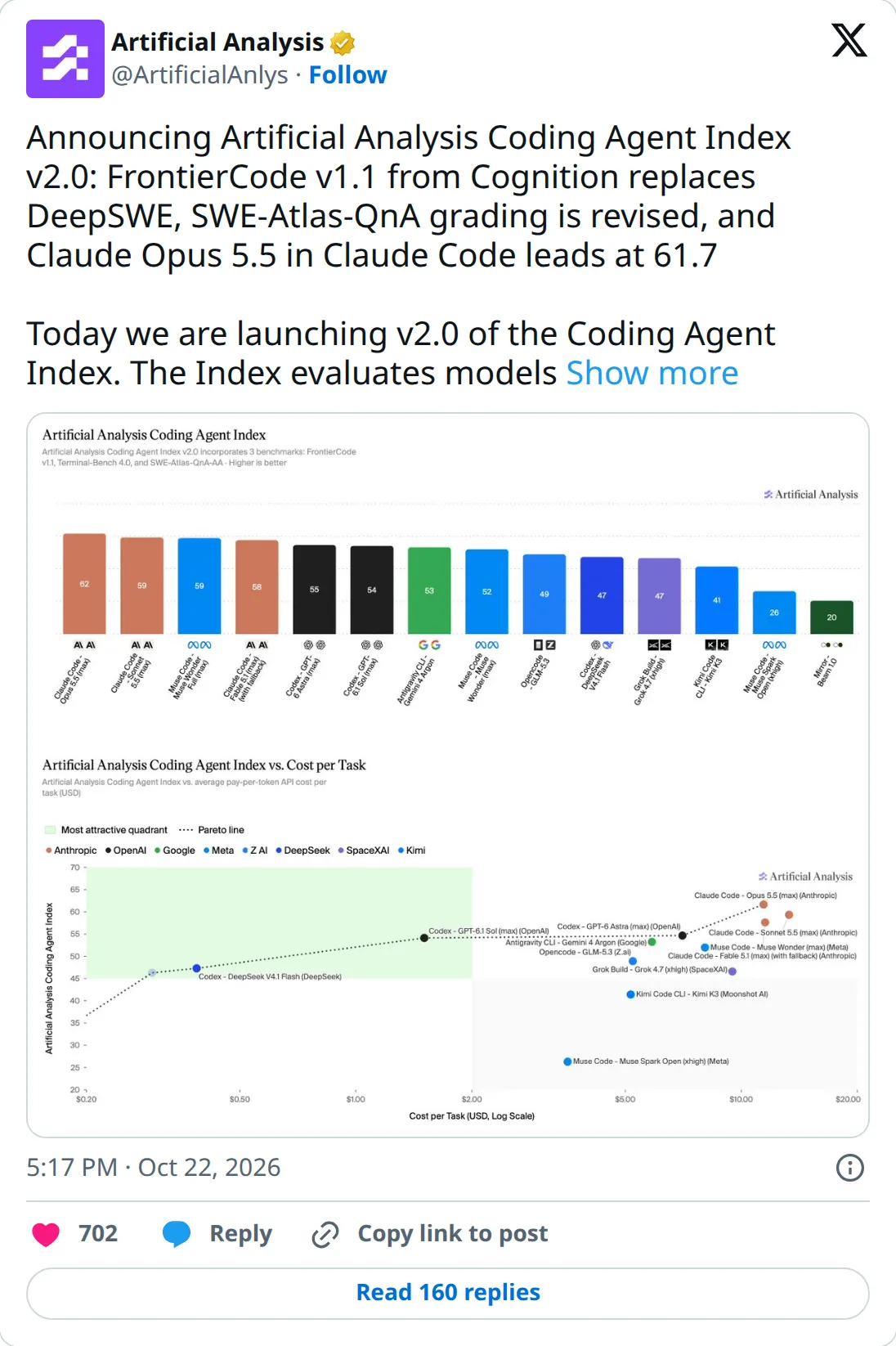
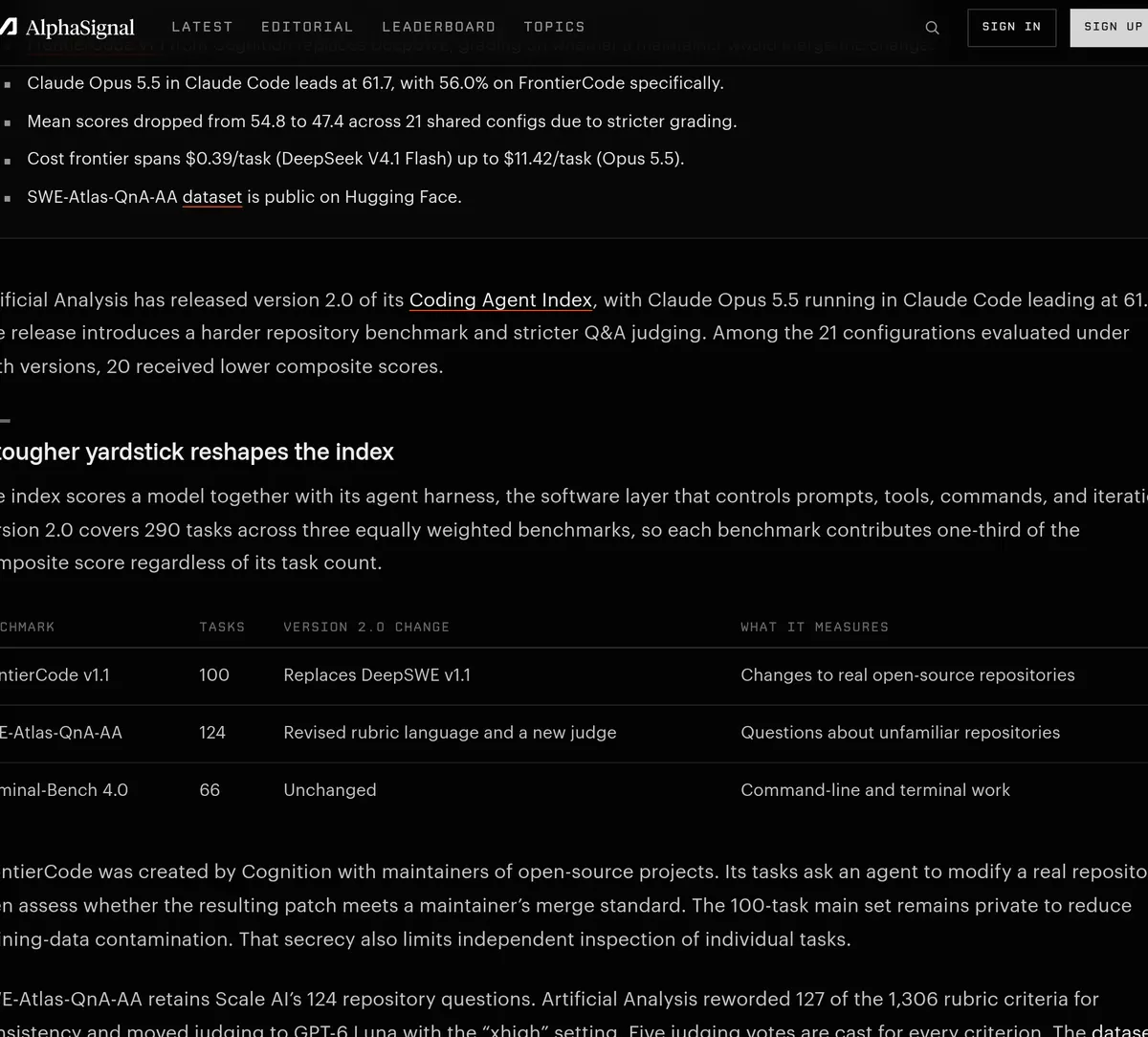
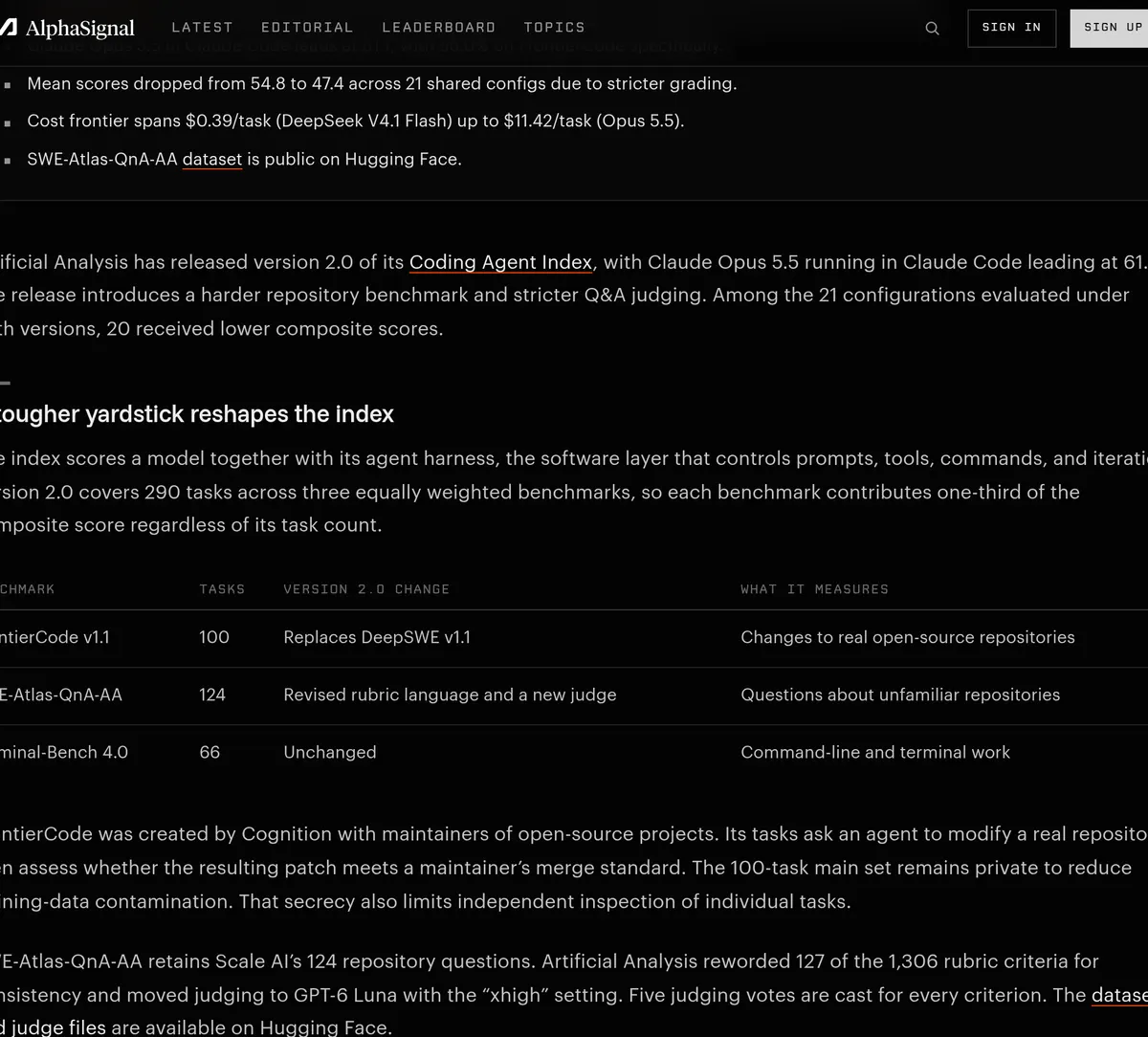
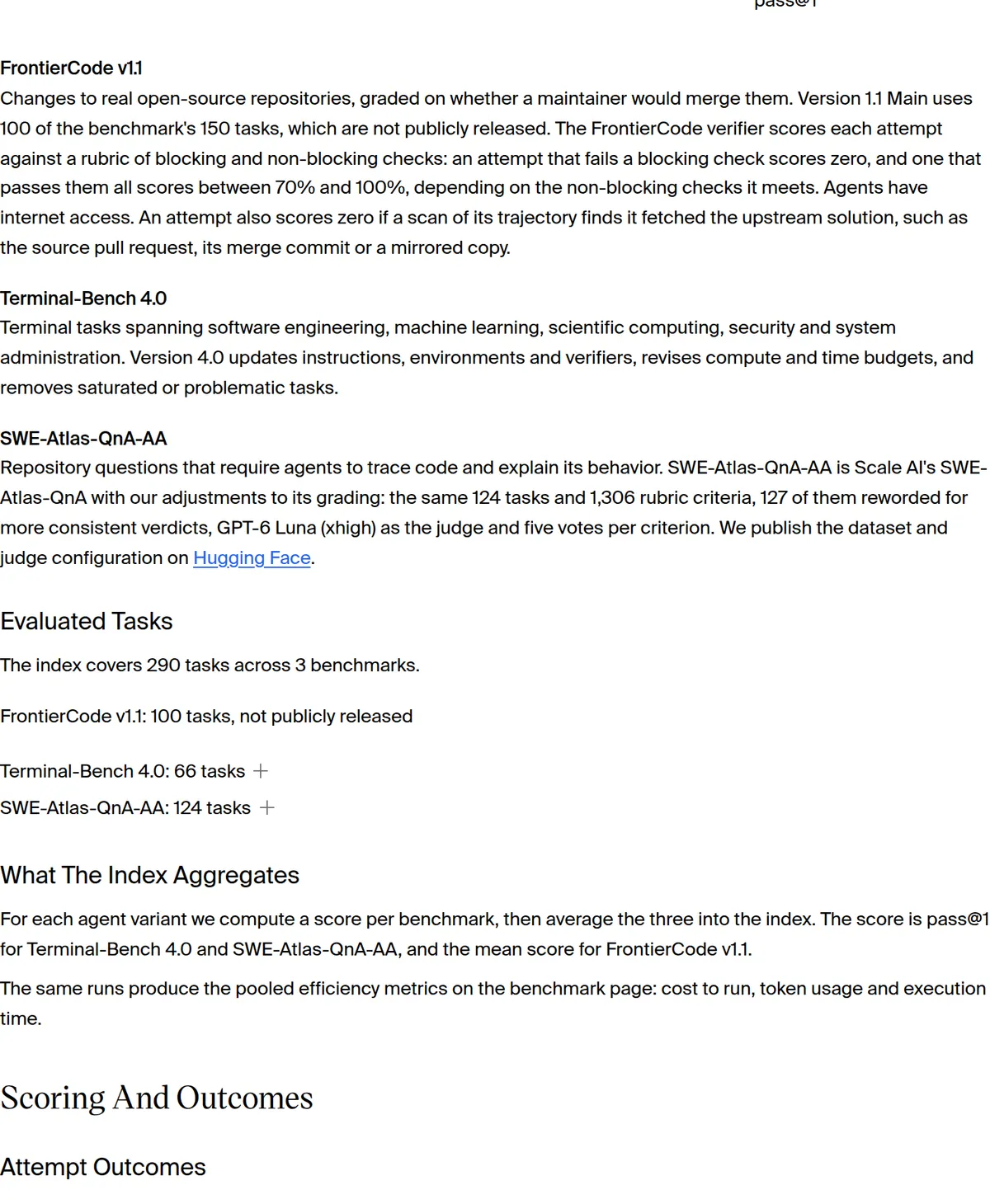
6. A tougher coding agent leaderboard puts Claude Code with Opus 5.5 first, and almost everyone's score dropped. The benchmarking firm Artificial Analysis released version 2.0 of its Coding Agent Index, which scores a model together with the coding tool it runs in. It swaps in FrontierCode from Cognition, which only gives credit if a project's maintainer would accept the change, and uses stricter grading for questions about unfamiliar code. Claude Code with Opus 5.5 leads at 61.7, followed by Claude Code with Sonnet 5.5 at 59.3 and Meta's Muse Code with Muse Wonder Full at 58.9. Across the 21 setups tested in both versions, the average fell from 54.8 to 47.4. Costs range from $0.39 per task for DeepSeek V4.1 Flash in Codex (score 47.3) to $11.42 for Opus 5.5. What this means for you: the top spot costs about 7 times as much per task as GPT-6.1 Sol in Codex ($1.50, score 54.1). Those costs use pay-per-use prices, not subscriptions. Scores from the old and new versions can't be compared. (Artificial Analysis on X, Methodology, AlphaSignal)
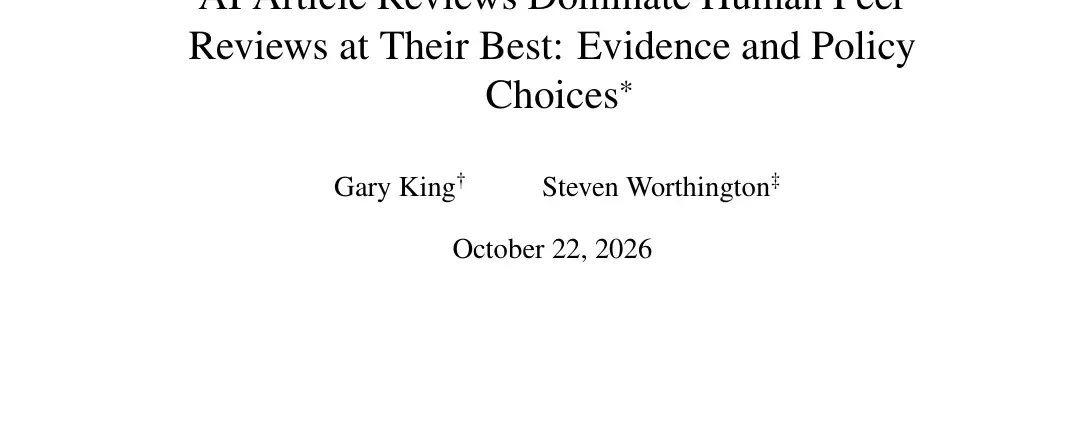
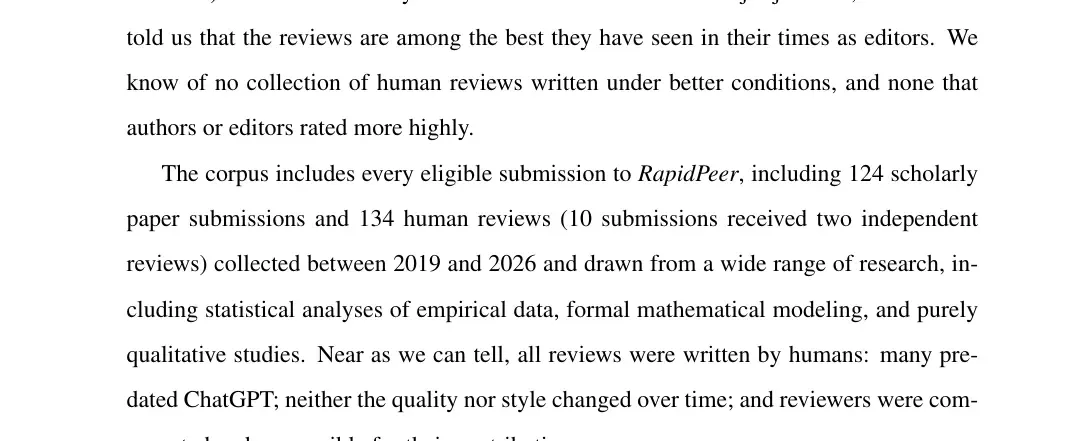
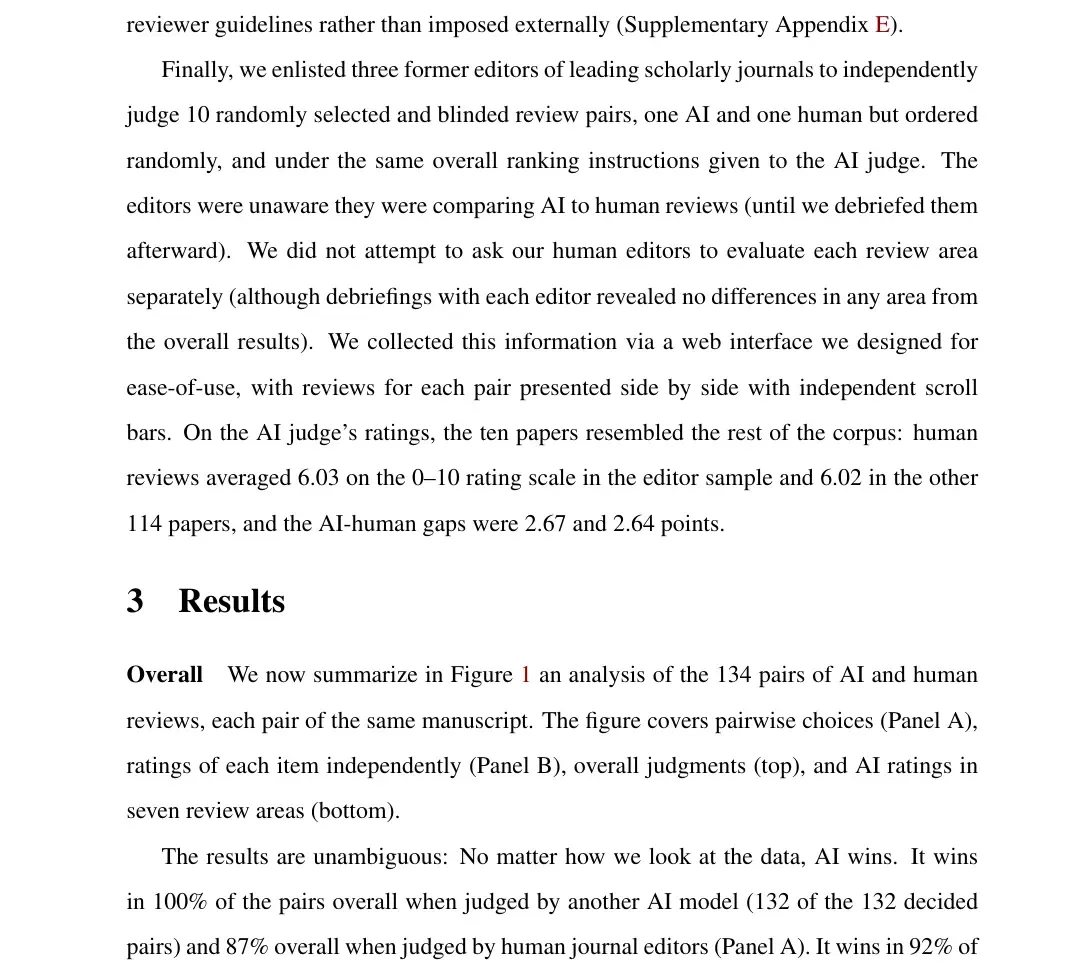
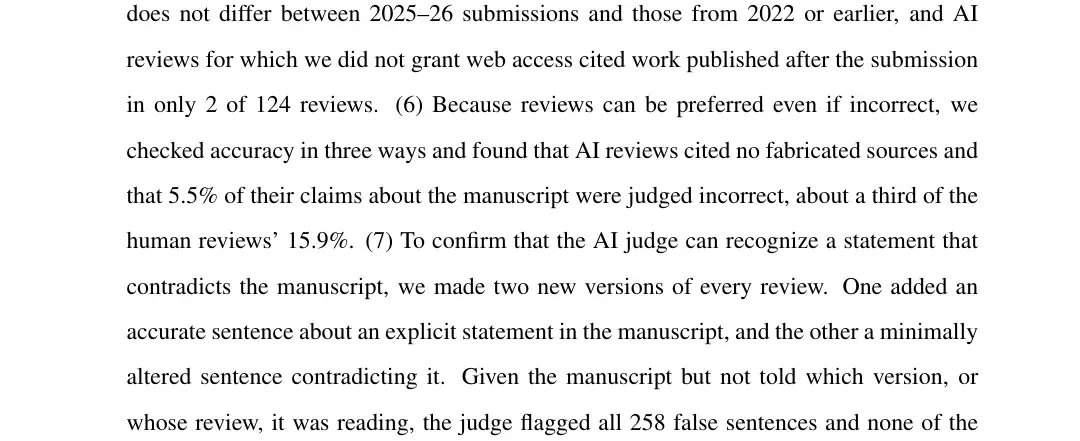
7. A Harvard study found AI paper reviews beat some of the best human peer reviews. Gary King and Steven Worthington compared 134 human reviews from rapidPeer, Harvard's paid, high-quality review service for faculty drafts, with reviews written by Claude Opus 4.8. When GPT-5.5 judged blind pairs, the AI review won all 132 pairs it could decide. When three former journal editors judged 10 pairs without knowing which was AI, the AI won 87% of the time. The AI reviews cited no made-up sources, and 5.5% of their claims about the papers were judged wrong, compared with 15.9% for the human reviews. What to weigh: the human editors only looked at 10 pairs, and the study didn't measure whether AI reviews actually led to better papers. The authors discuss policy options as far as journals dropping routine human reviews, and they flag real downsides. (Paper, PDF, Gary King)
Affiliate disclosure: some stories use affiliate or referral links. When a link pays a commission, the sentence next to it says so. Sponsored slots are labeled Sponsored. The channel card is a house ad until a sponsor is booked.
Newsletter
Join the waitlist and we'll email you when the first issue launches.
By submitting you agree to our Privacy Policy.
You're on the list after you confirm. We'll email you when the newsletter launches. You can leave from any message. The form posts to Resend.