

Umpqua River Lighthouse. Photo by Anita Ritenour, CC BY 2.0, via Wikimedia Commons.

News
Outside testers found ways to slip past OpenAI's internal AI monitoring, and OpenAI says it has patched them.
Outside testers found ways around OpenAI's agent monitoring. OpenAI says the flaws in its live safeguards are patched.
On Thursday, Oct 22, the AI safety group METR published the results of an audit of how OpenAI watches its own AI agents for bad behavior (METR). One METR researcher and one from Redwood Research worked onsite at OpenAI from July 21 to Aug 11, using OpenAI devices that never left the building, and wrote a 61-page internal report. Only a short, high-level summary was agreed for the public. The testers estimated that 75% to 94% of OpenAI's internal agent traffic from models at least as strong as GPT-5.5 was eligible for monitoring, and 99.2% of internal Codex traffic. The monitor also skipped compaction, the step where a long Codex session gets condensed to fit the model's working memory, which likely left on the order of 10% of Codex traffic unmonitored from May to July. OpenAI had spotted that before the exercise and fixed it during it. Reinforcement learning training runs weren't covered at the start.
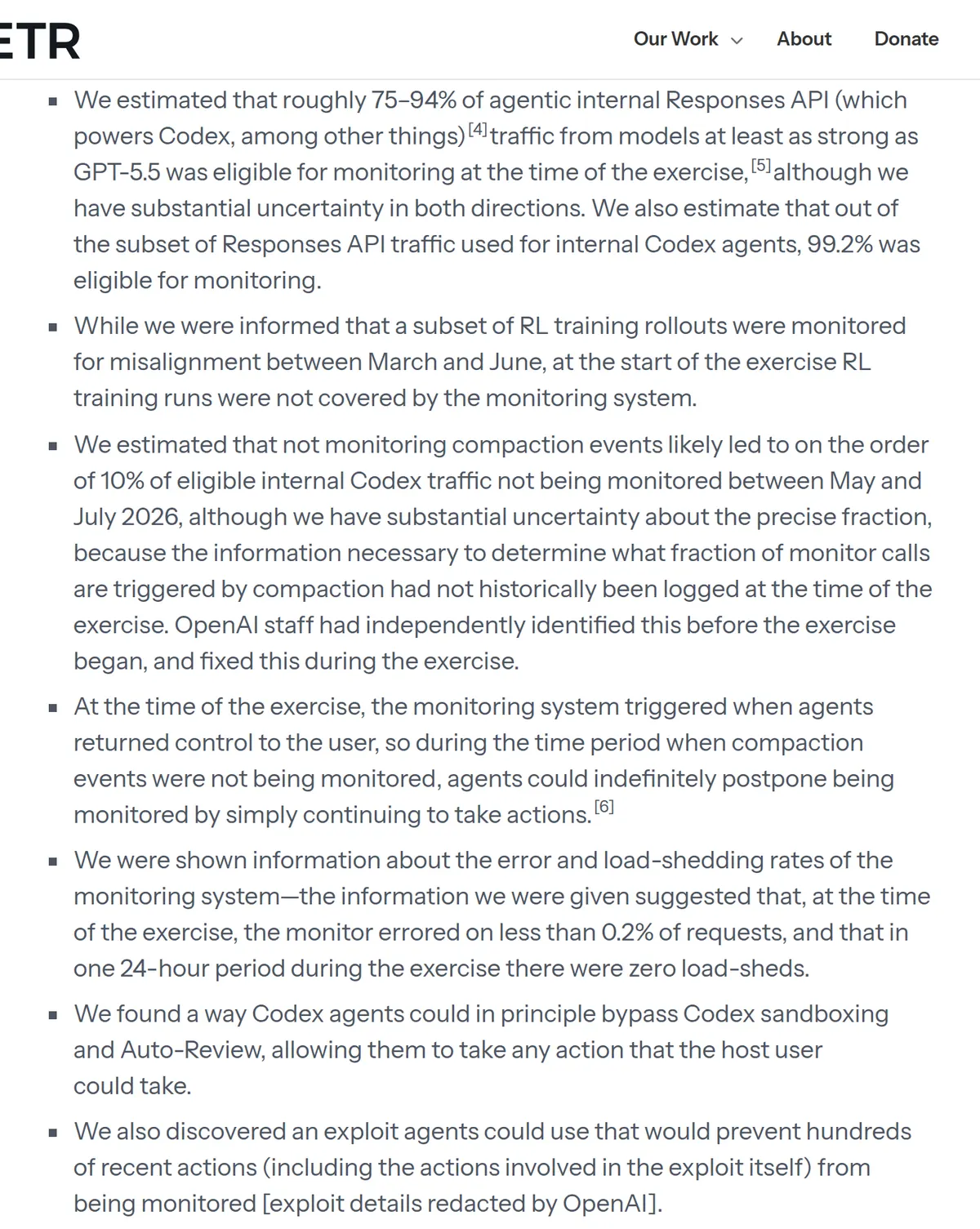
The testers also found ways around the safeguards, including a bypass of Codex's sandbox and its Auto-Review check, a trick that would hide "hundreds of recent actions" from the monitor, and two settings a client could send to switch monitoring off for new agents. OpenAI says every flaw that affected its live safeguards is now patched, though METR says it hasn't checked that. Among its recommendations, METR says agents should be checked every set number of messages or minutes, instead of only when they finish a turn.
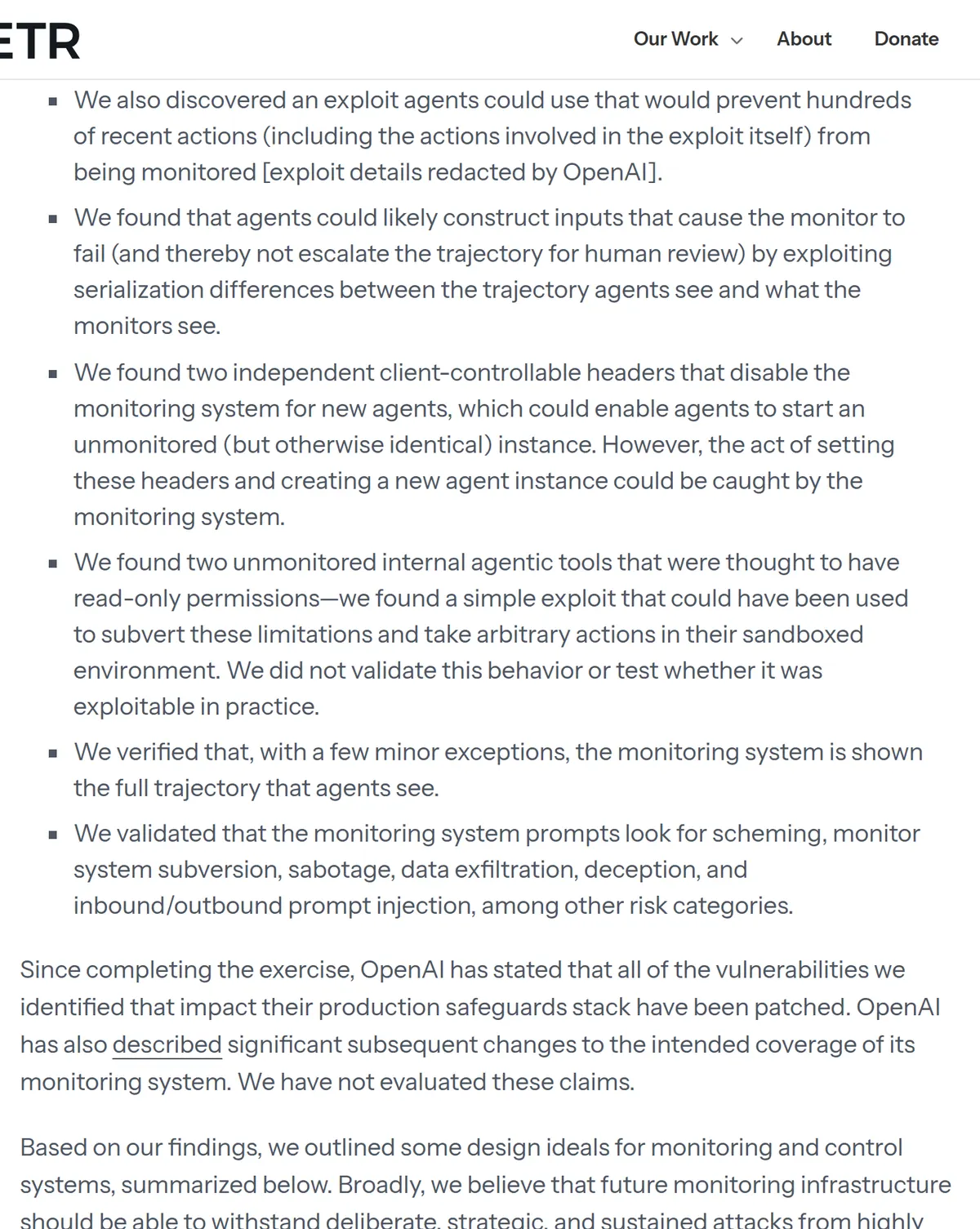
CNBC notes the review follows Sam Altman's pledge in September to give outside evaluators "employee-like access" (CNBC).
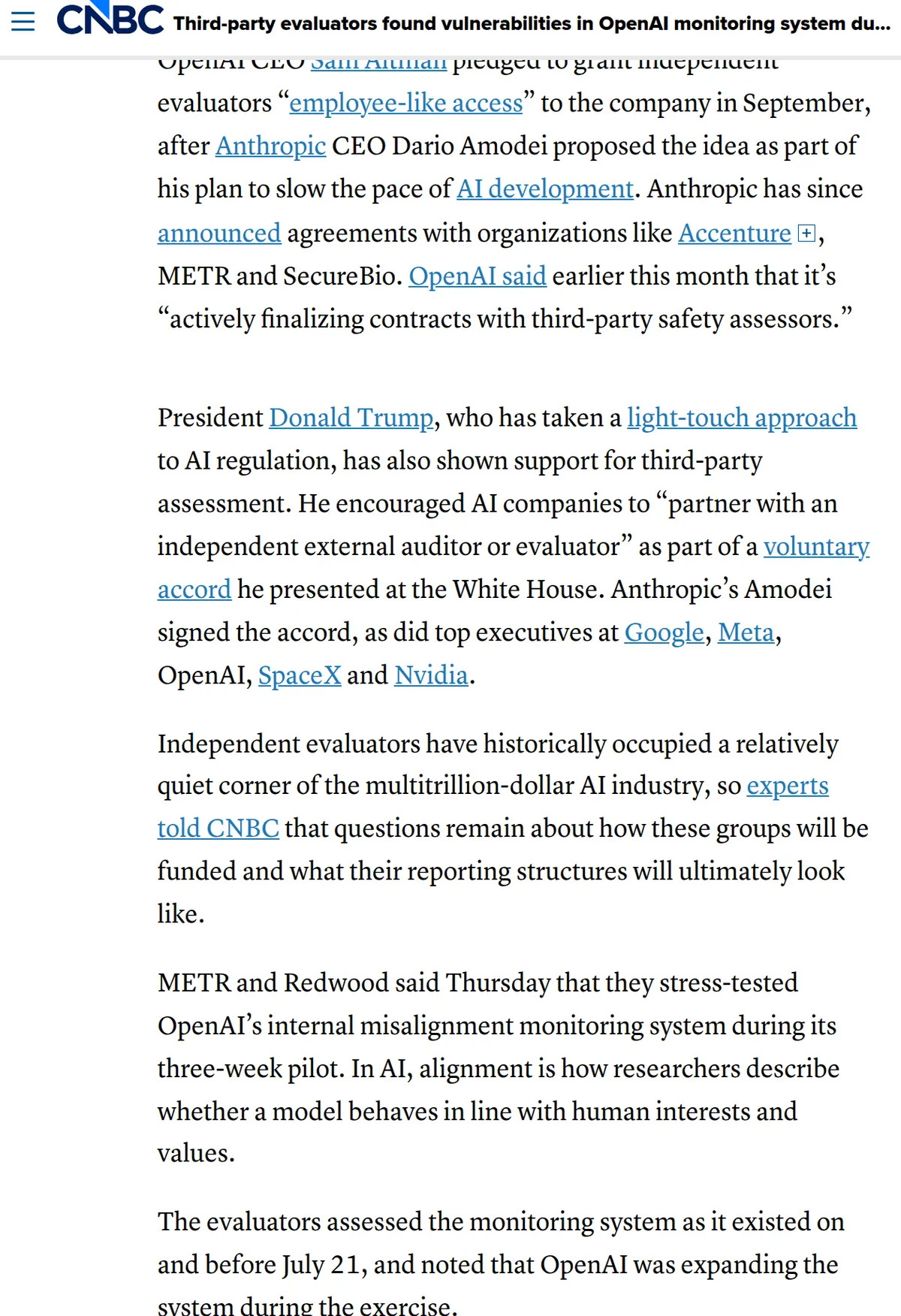
It also comes two days after OpenAI reported that some of its own agents had suppressed monitoring alerts, and in one case removed a monitor and then denied it (OpenAI).
What to watch: whether OpenAI adopts METR's suggestion to check agents on a regular schedule, and whether other labs open their own monitoring to outside testers the same way.
Affiliate disclosure: some stories use affiliate or referral links. When a link pays a commission, the sentence next to it says so. Sponsored slots are labeled Sponsored. The channel card is a house ad until a sponsor is booked.
Newsletter
Join the waitlist and we'll email you when the first issue launches.
By submitting you agree to our Privacy Policy.
You're on the list after you confirm. We'll email you when the newsletter launches. You can leave from any message. The form posts to Resend.