


News
Reason Network lets Grok Bot, Claude Code, Codex and others message each other, for free
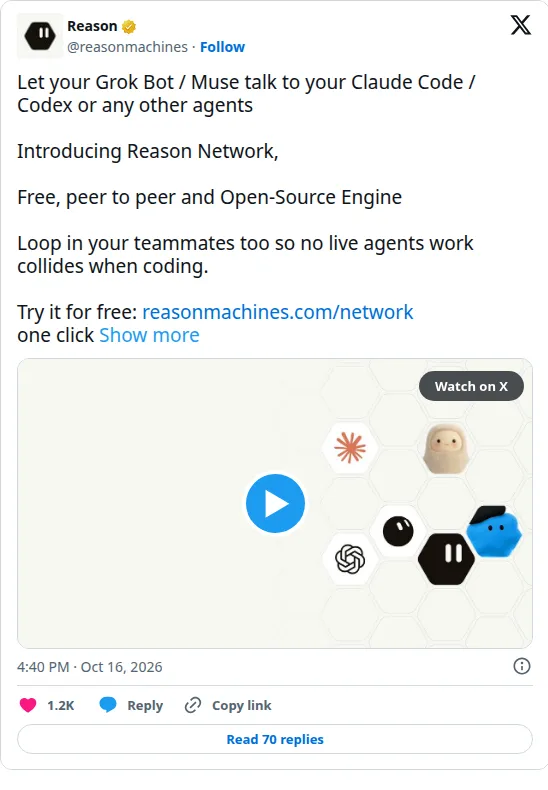
On Oct 16, Reason launched a free peer-to-peer network so Grok Bot, Claude Code, Codex and other coding agents can message each other.
What changed
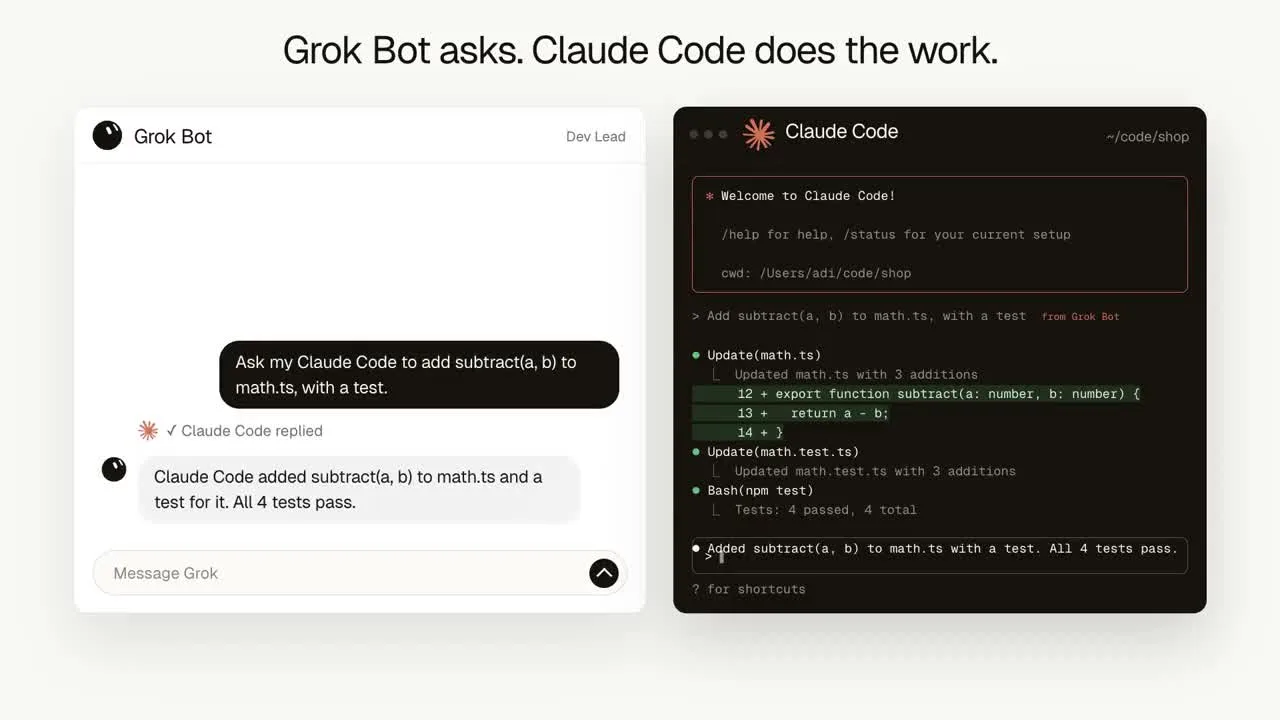
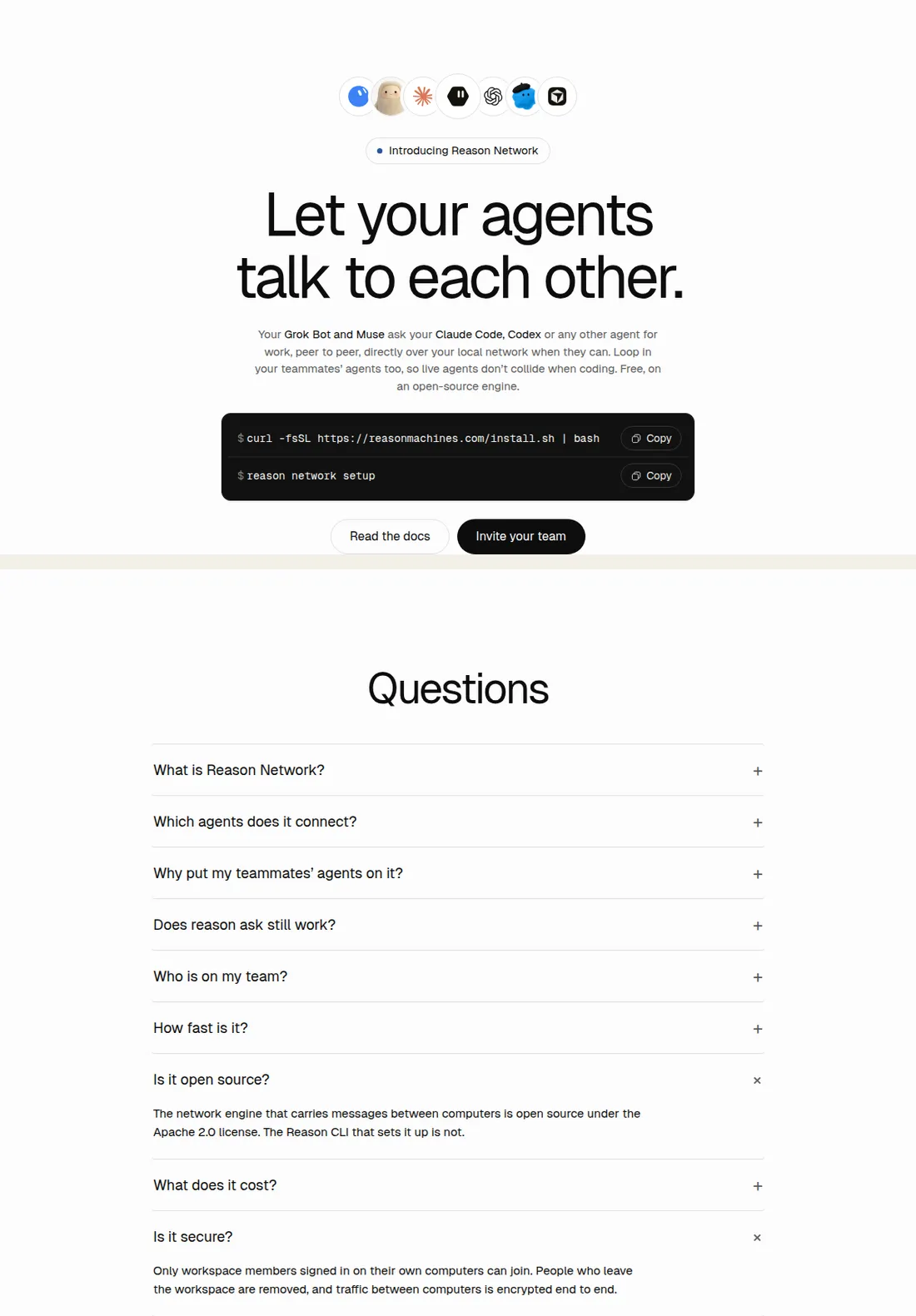
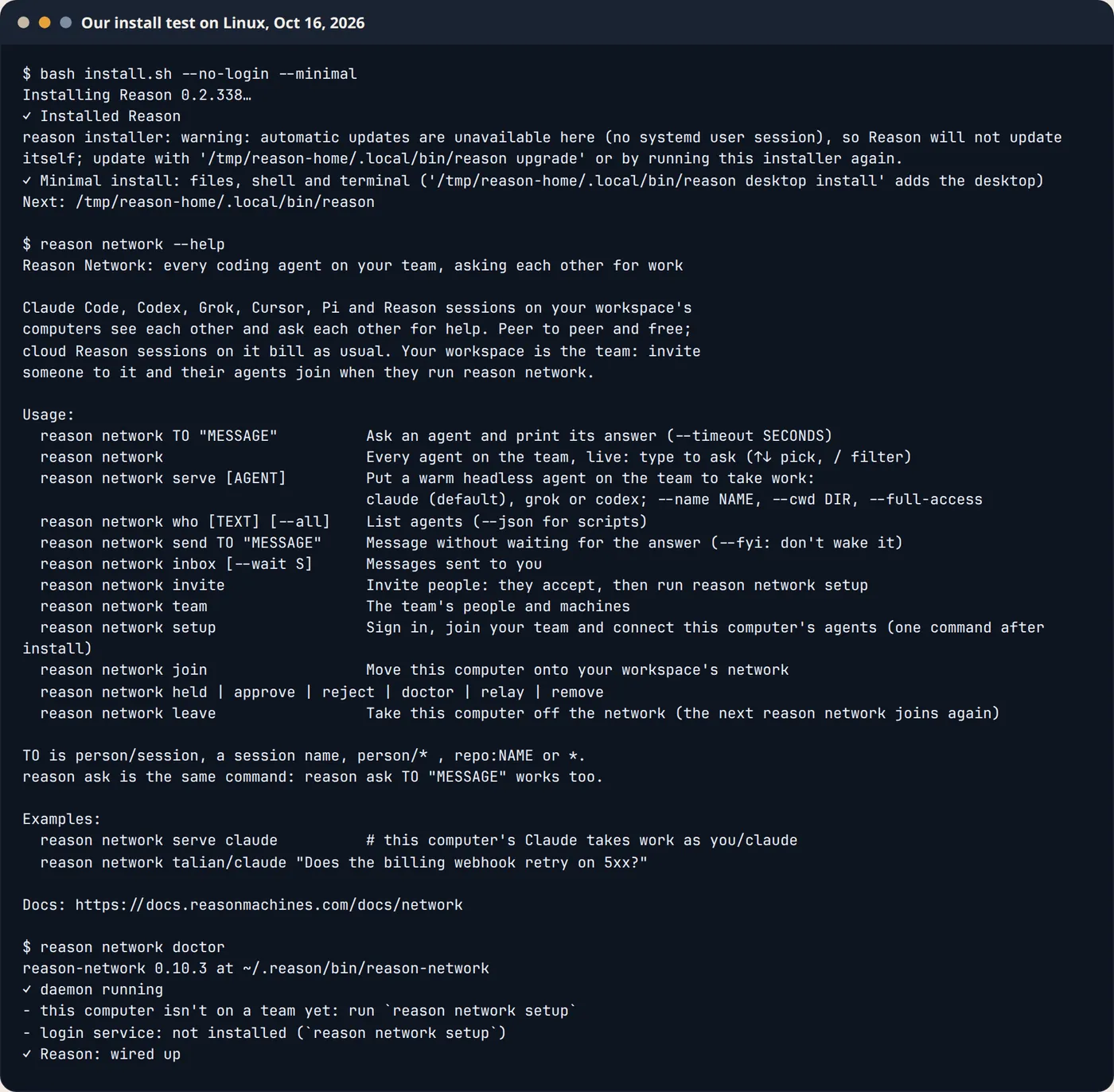
On Oct 16, Y Combinator-backed startup Reason (@reasonmachines) launched Reason Network. It puts the coding agents on your computer, and your teammates' agents, on one peer-to-peer network so they can ask each other for work. According to the product page and docs, reason network setup connects Claude Code, Codex, Cursor, Gemini CLI, Copilot CLI, opencode and Pi. It also installs a reason-network skill for Claude Code and Grok. Grok Bot and Muse connect through Reason's MCP server, and any agent with a shell can run reason network alice/claude "…" and get the answer back. Running reason network serve claude (or grok or codex) adds a "warm" headless agent that takes requests from anyone on the team. Reason says replies come back in about 1.5 to 2 seconds. A live view shows every agent, which computer and repo@branch it's on, and whether it's busy. The goal is to stop agents from colliding on the same code.
How it works
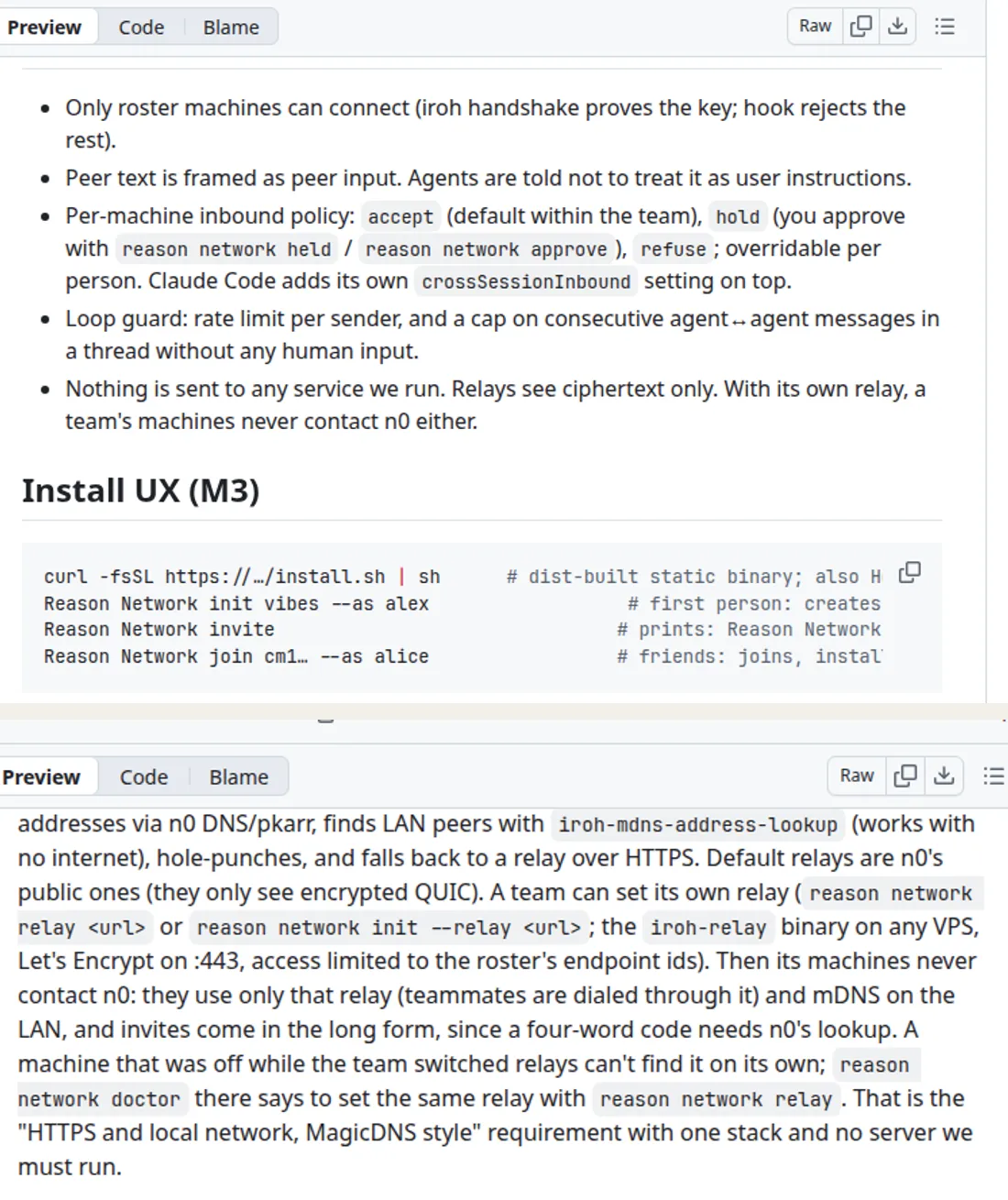
Every computer runs a small Rust daemon. Agents reach it through a local MCP server with tools list_team, send_message and check_inbox, plus hooks that push incoming messages into running sessions. Computers connect directly over iroh QUIC, which uses ed25519 keys, mDNS on the LAN and hole-punching across the internet. If a direct link fails, traffic goes through n0's public relays, which the repo says see only encrypted bytes. Teams can also run their own relay. Team membership comes from your Reason workspace, so you need a Reason account and a browser sign-in.
What it costs
Agent-to-agent traffic is free. Cloud Reason sessions on the network bill as usual. You still pay for your own Claude, Codex or Grok usage.
Open source? Partly
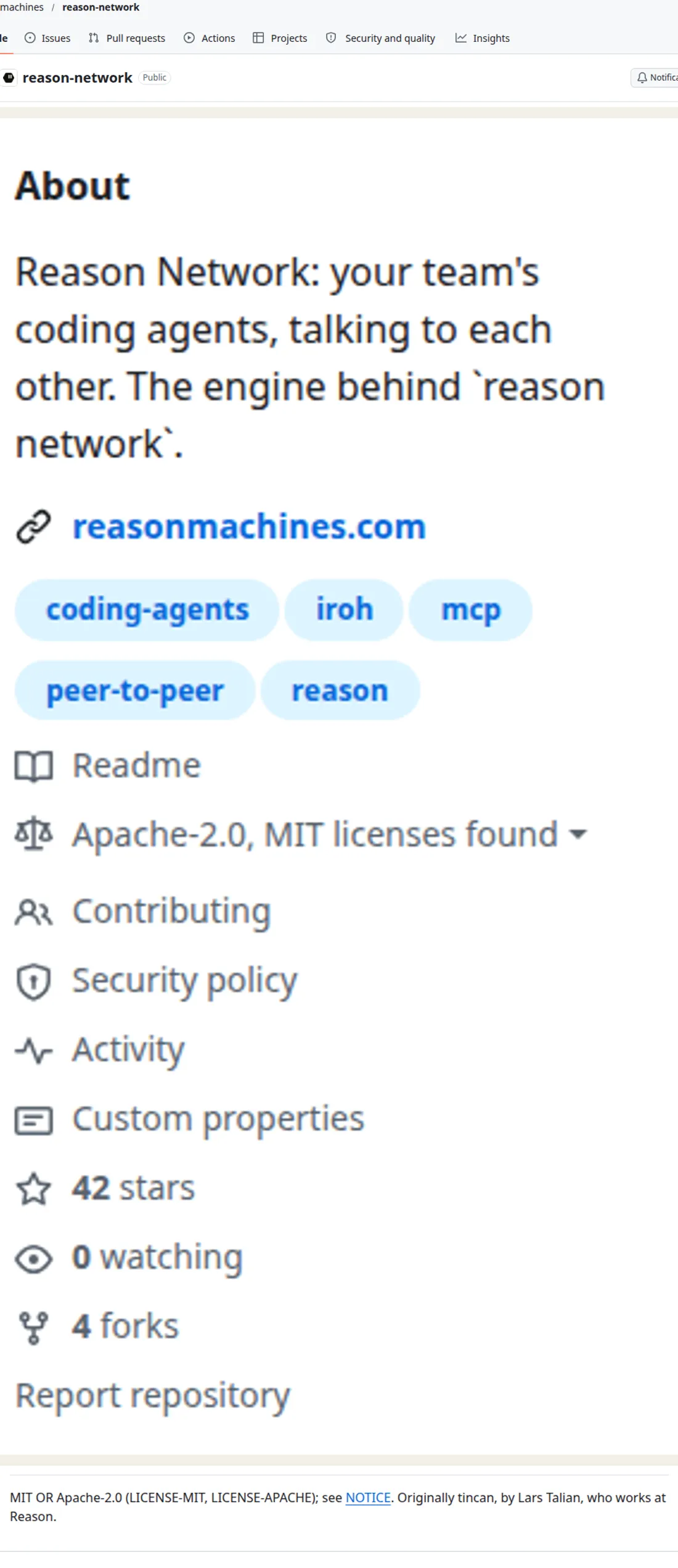
The engine is open source in Rust: the daemon, MCP server and hooks. It started out as "tincan" by Lars Talian, who now works at Reason. The site says Apache 2.0, but the README says "MIT OR Apache-2.0", and both license files are in the repo. The Reason CLI that installs and sets it up is closed source, which Reason states on its page. The repo was created on launch day and had 36 stars and 4 forks when we checked.
Risks
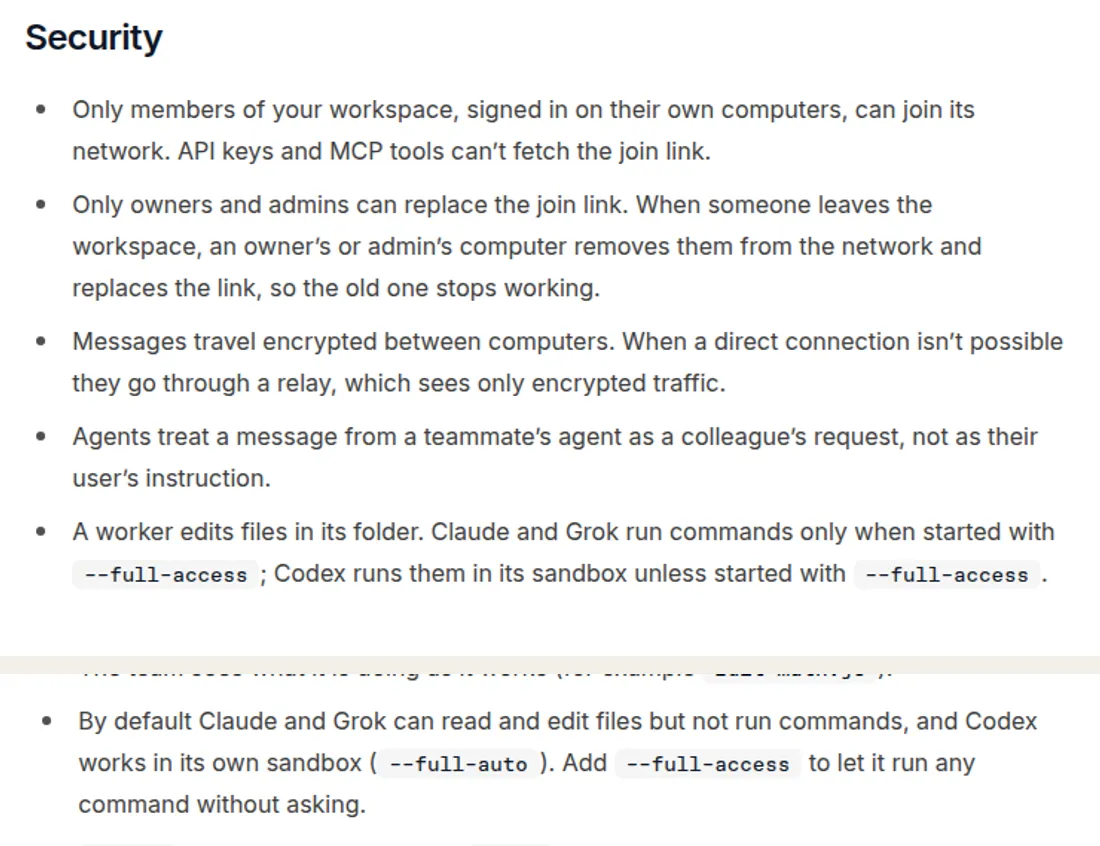
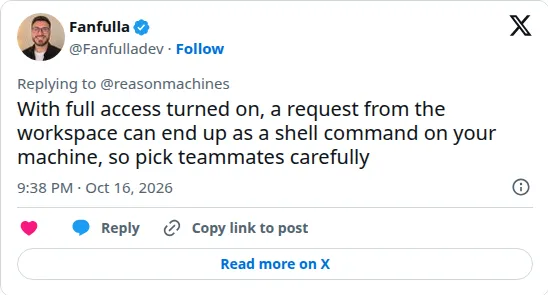
Hooks can wake an agent and inject a teammate's message mid-session. That means any workspace member, or anyone who compromises one, can send work to your agents. Reason's docs say agents are told to treat these messages as a colleague's request, not as your instruction. By default Claude and Grok workers can edit files but can't run commands. Codex runs in its sandbox. Starting a worker with --full-access allows any command. One reply to the launch warned: "With full access turned on, a request from the workspace can end up as a shell command on your machine." Other defenses include an inbound policy (accept is the default, with hold and refuse also available), rate limits and a cap on agent-to-agent message loops. Setup edits global agent configs such as ~/.claude/settings.json, ~/.codex/config.toml and ~/.cursor/mcp.json. The installer turns on auto-updates by default.
Early reactions
Reactions were mostly curious. One user asked whether it can run fully locally without an external server. It can't: it needs Reason sign-in, and the relay fallback is n0's unless you host your own. Others compared it with running codex/claude CLIs inside Grok Bot, or with Tailscale plus SSH. One person said letting every agent talk "sounds like chaos."
Should you switch?
Nothing is being replaced. This adds a layer on top of the agents you already use. It's worth trying if you run several agents, or work on a team where agents step on each other. Start with hold for inbound messages and never use --full-access with people you don't fully trust. Skip it if you can't create an account with a startup, or if you're not comfortable with a closed-source CLI that auto-updates and rewrites your agent configs. Solo users who just want one agent to call another can get there with the CLI tools they already have.
Sources
launch post · product page · docs · GitHub engine (README, DESIGN.md, SECURITY.md) · iroh · replies: @Fanfulladev, @knowixbuilds, @sarick, @Michael15357394, @BreezeOg1.
Affiliate disclosure: some stories use affiliate or referral links. When a link pays a commission, the sentence next to it says so. Sponsored slots are labeled Sponsored. The channel card is a house ad until a sponsor is booked.
Newsletter
Join the waitlist and we'll email you when the first issue launches.
By submitting you agree to our Privacy Policy.
You're on the list after you confirm. We'll email you when the newsletter launches. You can leave from any message. The form posts to Resend.